

You’re tired in a way sleep doesn’t touch. There’s more hair in the shower drain than there used to be. One flight of stairs leaves you winded. So you get bloodwork, and the answer comes back: your blood count is normal.
Then someone notices your ferritin is low. Or nobody mentions it at all.
Low ferritin with normal hemoglobin can indicate iron deficiency without anemia. It may contribute to symptoms such as fatigue or hair shedding, but those symptoms have many possible causes. This guide explains how clinicians assess iron stores, what may contribute to low ferritin, and what questions to raise at an appointment. At Monarch Functional Medicine, Julie McDonald, PA-C, considers symptoms alongside relevant lab results and health history.
What Low Ferritin With Normal Hemoglobin Actually Means
This pattern has a name: iron deficiency without anemia (you may also see it called non-anemic iron deficiency). Your body’s iron stores may be low even though hemoglobin remains within the laboratory’s reference range. A clinician interprets both results with the person’s symptoms and health context.
Two terms are worth knowing, and both are simpler than they sound:
- Ferritin is the protein that stores iron. Think of it as your iron savings account. When ferritin is low, your reserves are running dry.
- Hemoglobin is the protein inside red blood cells that carries oxygen around your body. When hemoglobin drops below normal, that’s anemia.
Here’s the key point. Your body treats hemoglobin as a top priority because delivering oxygen keeps you alive. When iron gets scarce, it pulls from savings to keep hemoglobin steady. Your iron stores can be nearly empty while your standard blood count still looks fine.
The reason some people have low ferritin and normal hemoglobin is because your body draws from the ferritin to keep hemoglobin up.Read on Reddit ↗
That’s why low ferritin with normal hemoglobin is better read as an early warning than as a “nothing to worry about” result. For women in their late 30s, 40s, and 50s, especially those dealing with heavy periods, perimenopause, thyroid concerns, or gut issues, it’s a commonly overlooked reason for feeling worn down.
How Iron Deficiency Can Progress
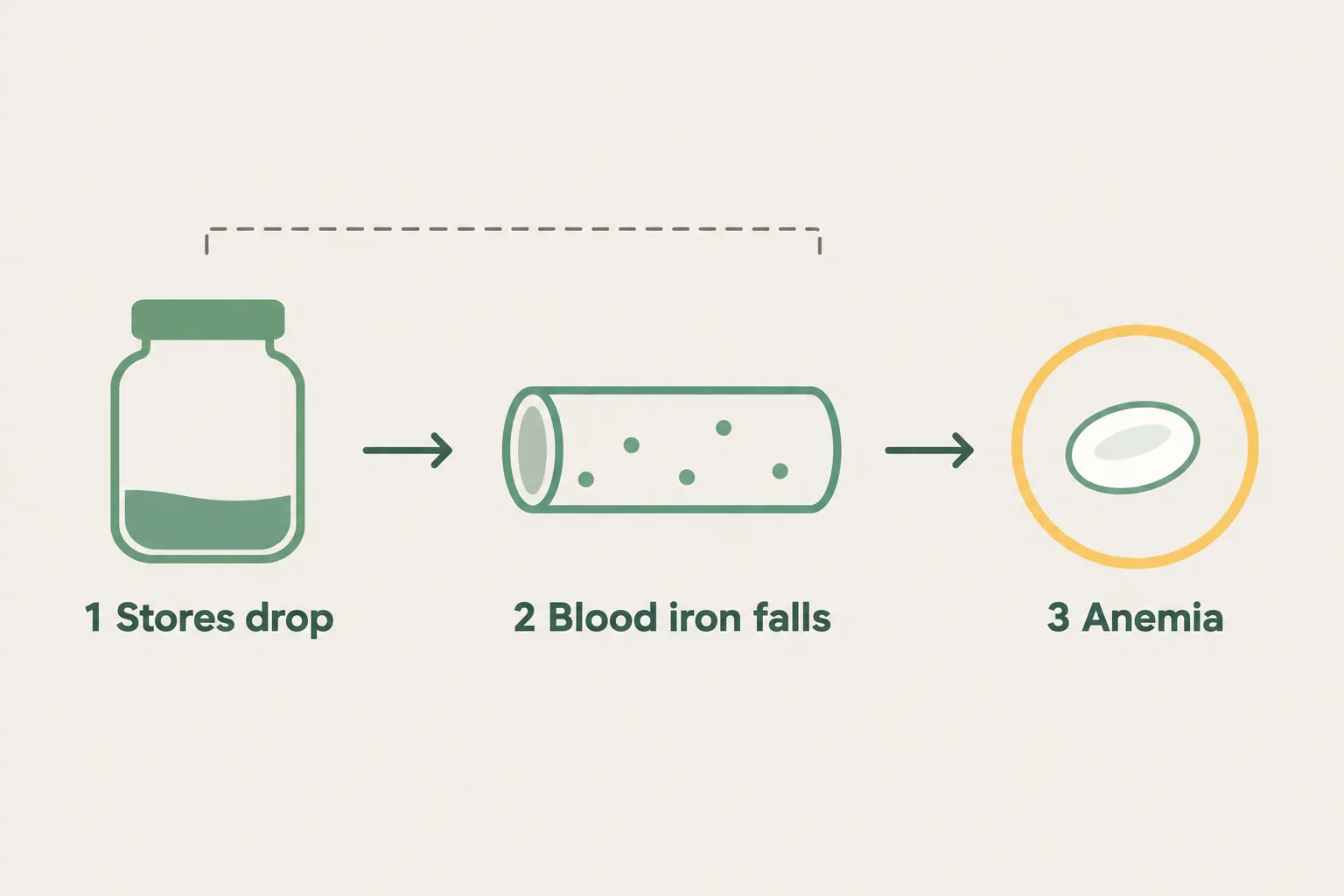
Iron deficiency usually builds slowly, in stages:
Iron deficiency can develop before anemia, although the pattern and pace vary. A CBC can remain within range while iron stores are low; ferritin and, when appropriate, other iron studies help assess iron status.
- Stores drop first. Ferritin falls, but iron in the blood and hemoglobin still look normal. Routine bloodwork usually won’t flag anything.
- Available iron starts to fall. The iron circulating in your blood, ready for your cells to use, begins to decline. Your body is now struggling to keep up.
- Hemoglobin finally drops. Anemia shows up on a standard blood count, and this is usually when someone gets diagnosed.
A normal CBC does not measure iron stores directly. Whether and when to repeat testing depends on the initial results and the likely cause.
What Ferritin Level Is Considered Low?
There is no single cutoff that applies to every person or situation. In September 2026, the American Society of Hematology (ASH) published updated diagnostic guidance with thresholds that vary by population and clinical context.
| Group described in ASH guidance | Ferritin threshold used in the guidance |
|---|---|
| Adults; menstruating or pregnant individuals | 30 ng/mL or lower |
| Some higher-risk groups, including people with heavy menstrual bleeding and pregnant individuals with anemia | 50 ng/mL or lower |
| Adults with inflammation | Under 100 ng/mL or transferrin saturation under 20% |
These are diagnostic thresholds to discuss with a clinician, not personal treatment targets. The ASH guidance notes that inflammation can make ferritin harder to interpret; clinicians may consider transferrin saturation and other findings. See the ASH diagnostic guidance on iron deficiency for the full recommendations.
Lab reference ranges vary, and a result within a printed reference range does not replace clinical interpretation. Hemoglobin is assessed separately; a person can have low iron stores while hemoglobin remains within range.
What is a dangerously low ferritin level? There is no universal danger cutoff. A very low result or symptoms such as chest pain, fainting, a racing heartbeat, or severe shortness of breath warrant prompt medical assessment.
Ferritin can rise during inflammation, so a normal or higher result may not always rule out iron deficiency. Clinicians may interpret ferritin alongside transferrin saturation, inflammatory markers, and the overall clinical picture. Our guide to functional medicine inflammatory markers and what gets tested explains common inflammation markers.
Low Ferritin Normal Hemoglobin Symptoms
Iron supports several body functions, but symptoms associated with low iron are not specific to iron deficiency. A clinician may consider these symptoms alongside test results and other possible causes. Reported symptoms can include:
- Fatigue that sleep doesn’t fix. Not just tired at the end of a long day, but tired when you wake up.
- Brain fog. Trouble concentrating, losing your train of thought, or feeling mentally slow. Headaches can come with it.
- Hair shedding and brittle nails. More hair in your brush, or nails that split easily.
- Restless legs. An uncomfortable urge to move your legs, often worse at night, which disrupts sleep and deepens fatigue.
- Shortness of breath or low stamina with exercise. Workouts that used to feel easy now feel hard.
- Feeling cold, irritable, or low. Cold hands and feet, shorter patience, or a flatter mood.
These symptoms can also occur with thyroid conditions, hormone changes, sleep problems, and other health issues. They cannot identify the cause on their own. If fatigue is your main concern, read Monarch’s chronic fatigue for more on evaluation.
Because low ferritin may be one of several factors considered in hair shedding, see Monarch’s hair loss for related evaluation options.
What Causes Low Ferritin With Normal Hemoglobin?
Most causes of low iron fall into four buckets: iron is going out, not enough is coming in, not enough is being absorbed, or more is being used. Working out which bucket (or buckets) applies to you is the most important step, because it shapes everything after.
Blood Loss: Heavy Periods and Hidden Bleeding
For women who still have periods, heavy menstrual bleeding is one of the most common reasons iron stores run low. Each heavy cycle draws a little more from your savings, and many women don’t realize their flow counts as “heavy” because it’s always been that way.
Perimenopause can add to this. As estrogen and progesterone shift, periods often become heavier, longer, or less predictable. If your cycles changed in your 40s and you’re more tired than ever, low progesterone and low ferritin may be part of the same story.
Other sources of blood loss include slow bleeding in the digestive tract (which you may never see) and frequent blood donation.
Gut Health and Absorption Problems
You can eat plenty of iron and still run low if your gut isn’t absorbing it well. Common reasons include:
- Celiac disease and other conditions that damage the gut lining where iron is absorbed
- Low stomach acid, which iron needs for proper absorption. Long-term use of acid-reducing medications may contribute.
- Ongoing gut inflammation, which can interfere with absorption
- Weight loss surgery or other digestive surgeries that change how food moves through the gut
Digestive symptoms can have many causes. If they occur alongside low ferritin, ask your clinician whether evaluation for malabsorption or another digestive condition is appropriate.
Diet and Increased Demand
People who eat little or no meat can meet their iron needs, but it usually takes planning, because iron from plants is absorbed less easily than iron from meat and seafood.
Some seasons of life raise iron needs, including pregnancy, breastfeeding, and intense endurance training.
Daily habits matter too. Coffee, tea, and calcium (including supplements and dairy) can reduce how much iron you absorb when taken with iron-rich meals.
The Thyroid and Hormone Connection
For women dealing with fatigue and hormone changes, this link deserves attention.
Iron and thyroid health are connected. The thyroid relies on iron as part of making thyroid hormone, so low iron may make its job harder. An underactive thyroid, in turn, can affect how your body handles iron and may contribute to heavier periods.
The symptoms of low thyroid function and low iron are strikingly similar: fatigue, hair loss, feeling cold, brain fog, and low mood. Look at only one, and you can miss the other. That’s why we review ferritin alongside thyroid and hormone labs rather than in isolation.
Is Low Ferritin a Sign of Cancer?
It’s a natural worry, and it deserves a calm, honest answer.
Low ferritin does not by itself mean cancer. Many causes are noncancerous, but unexplained iron deficiency deserves individualized assessment.
The British Society of Gastroenterology guideline on iron-deficiency anemia says the risk of gastrointestinal cancer is low in iron deficiency without anemia and finds insufficient evidence for invasive investigation in every non-anemic case unless there are additional indications. The guideline calls for a lower threshold to investigate men, postmenopausal women, and people with relevant symptoms or risk factors. It addresses anemia and clinical evaluation; it does not mean every person with low ferritin needs endoscopy.
A clinician can consider age, symptoms, family history, menstrual status, other test results, and ongoing blood loss when deciding next steps. Seek medical advice for unexplained low iron or concerning gastrointestinal symptoms.
Low Ferritin and Low Hemoglobin: When It Becomes Anemia
If iron stores stay low long enough, hemoglobin eventually drops too. That’s iron deficiency anemia. Your body can no longer protect your red blood cells, and symptoms often become harder to ignore.
That’s why the earlier stage, low ferritin with normal hemoglobin, is the better time to act. You have a chance to find the cause and rebuild stores before oxygen delivery is affected.
Seek prompt medical care if you notice any of these:
- Chest pain
- Fainting or near-fainting
- A rapid or pounding heartbeat
- Black, tarry, or bloody stools
- Severe shortness of breath
Which Tests Give the Full Picture
A single ferritin number is a starting point, not the whole story. A more complete look often includes:
- Ferritin and a complete blood count (CBC). Ferritin shows your stores. The CBC shows hemoglobin and the size and shape of your red blood cells.
- An iron panel. This may include serum iron, iron-binding capacity or transferrin, and transferrin saturation. These measures describe circulating iron and are interpreted alongside ferritin and other findings; they do not directly measure iron reaching individual cells.
- Inflammation markers. Tests like CRP help show whether inflammation might be pushing ferritin up and hiding a deficiency.
- Thyroid labs, when appropriate. Symptoms, examination, and medical history help determine whether these tests are relevant.
- Celiac screening or other gut testing, depending on your symptoms and history.
Not everyone needs every test. The evaluation depends on symptoms, menstrual or bleeding history, diet, medications, digestive health, and other medical factors. For background on how Monarch approaches testing, see Monarch’s lab testing overview.
Questions to Ask Your Clinician

Bring the lab report and ask what the results mean for your situation. Helpful questions may include:
- Is my ferritin result consistent with iron deficiency given my age, symptoms, and health history?
- Would transferrin saturation or an inflammation marker help interpret my ferritin?
- What could be contributing to the result, such as bleeding, diet, medication, or absorption?
- Do I need iron treatment, follow-up testing, or evaluation for an underlying cause?
A 2024 peer-reviewed review, Recommendations for diagnosis, treatment, and prevention of iron deficiency, discusses how assessment and treatment depend on factors such as age, pregnancy, underlying conditions, and the cause of iron loss.
How to Treat Low Ferritin With Normal Hemoglobin
Treatment decisions should be made with a clinician. Depending on the results and circumstances, iron replacement may be considered while the underlying cause is evaluated and addressed. Identifying a cause can help guide the plan and reduce the chance that deficiency continues or returns.
Iron Supplementation, Done Thoughtfully
Oral iron is a common first approach, and it should be guided by a clinician who knows your labs. A few things to know:
- Dose and schedule matter. How much iron you take, and how often, can affect both absorption and side effects. Ask your provider what fits your situation.
- Side effects are common but manageable. Constipation, stomach upset, and dark stools are typical with some forms of iron. The type of iron and when you take it can change how well you tolerate it.
- Avoid self-prescribing iron. Too much iron can be harmful, and the right approach depends on the diagnosis and individual health factors. Ask a clinician whether supplementation is appropriate.
- IV iron may be considered in selected situations. The route of treatment depends on the cause, test results, response to oral iron, and clinical needs; it is not a routine option for everyone with low ferritin.
Food, Absorption, and Gut Support
Food alone may not rebuild very low stores, but it supports the process and helps keep levels steady over time.
- Iron-rich foods: red meat, poultry, fish, and shellfish provide iron that’s absorbed more easily. Beans, lentils, tofu, pumpkin seeds, and leafy greens provide plant-based iron.
- Pair iron with vitamin C: citrus, bell peppers, strawberries, or tomatoes can help your body absorb plant-based iron.
- Watch the timing: keep coffee, tea, and calcium a little apart from iron-rich meals and any iron supplement.
- Address diagnosed absorption problems: if testing identifies a digestive condition that affects iron absorption, treating that condition may be part of the care plan.
Retesting and Tracking Progress
Rebuilding iron stores takes patience. Ferritin usually rises over weeks to months, not days. Your clinician can recheck your levels to confirm things are moving the right way and adjust the plan if they aren’t.
Symptoms often improve gradually, and there’s no guaranteed timeline. If symptoms continue, a clinician can reassess the result and consider other possible explanations, such as thyroid conditions, sleep problems, or blood-sugar concerns.
A Root-Cause Approach to Low Iron in Michigan
At Monarch Functional Medicine, we don’t stop at “your ferritin is low, take some iron.” We ask why it’s low and what else might be shaping how you feel.
That means reading ferritin alongside thyroid labs, hormone patterns, menstrual history, gut health, diet, sleep, and stress. Julie McDonald, PA-C, brings more than two decades of clinical experience across family medicine, emergency medicine, and functional medicine to that process, pairing the diagnostic rigor of conventional medicine with a personalized, root-cause model.
Monarch Functional Medicine serves patients in Michigan. Its care model considers relevant symptoms, laboratory findings, and lifestyle factors to help guide next steps; no specific diagnosis or outcome is guaranteed.
Frequently asked questions
Can you have low ferritin without being anemic?
What ferritin level is considered low?
How long does it take to raise ferritin?
Can low ferritin cause hair loss and brain fog?
Does low ferritin mean I have thyroid disease?
Should I take iron if my ferritin is low but hemoglobin is normal?
Low ferritin may be one factor among several that could relate to how you feel. The 12 Week Reset is Monarch Functional Medicine’s starting point for new patients and provides a structured opportunity to review health concerns and discuss next steps. Michigan residents can learn more about the 12 Week Reset or contact the practice to ask whether its services are a fit.