Your bloodwork came back “normal.” Your doctor said everything looks fine. Yet you’re still bloated by mid-afternoon, gassy after meals, running to the bathroom (or not going at all), and dragging through the day. When standard tests can’t explain why you feel off, functional medicine testing for gut issues looks deeper, past whether you’re sick and into why your body isn’t working the way it should. At Monarch, we treat that as detective work: follow the clues, connect the dots, find the cause.
What Is Functional Lab Testing?
Functional lab testing maps how your body is actually working right now, the balance of microbes in your gut, how well you break down food, whether inflammation is simmering, and whether a hidden infection is stirring things up. That’s a different question than most standard labs answer.
A standard test mostly asks, “Are you sick yet?” It’s built to flag disease once it’s advanced enough to show up. A functional test asks, “Why don’t you feel well?”, catching imbalances long before they become a diagnosis. Functional medicine has grown into a recognized, root-cause approach to care, as traced in this overview of functional medicine’s past, present, and future. The goal isn’t to replace your regular doctor. It’s to add the layer of “why” that a rushed appointment often skips.
| Standard test | Functional test | |
|---|---|---|
| Core question | “Are you sick yet?” | “Why don’t you feel well?” |
| Built to | Flag disease once it’s advanced enough to show up | Catch imbalances long before they become a diagnosis |
| Role in your care | Your regular doctor’s baseline | Adds the layer of “why” a rushed appointment often skips |
Why Gut Health Is the Starting Point
Your gut does far more than digest lunch. It helps regulate your energy, mood, weight, immune system, and even how you process hormones. When it’s out of balance, the ripple effects can look like fatigue, brain fog, stubborn weight, or the perimenopause and thyroid symptoms so many of our clients are already wrestling with.
That’s why the gut is often the first place we look. Sort out what’s happening there, and a surprising number of “unrelated” symptoms start to ease. The case for treating the gut through a whole-body lens is well documented in research on integrative approaches to gastrointestinal disease, which shows how closely digestion, inflammation, and overall wellness are tied together.
Signs You May Need Functional Testing for Gut Issues
You don’t need a diagnosis to start investigating. Take a closer look if you’re dealing with:
- Persistent bloating, gas, or a distended belly after meals
- Irregular bathroom habits, constipation, loose stools, or bouncing between both
- Frequent heartburn or reflux
- Food reactions or new sensitivities
- Fatigue or brain fog that doesn’t match your sleep
- Skin flare-ups like acne, eczema, or rosacea
- Unexplained weight gain or trouble losing weight
- Symptoms that stick around even though your labs came back “normal”
One or two of these once in a while is just life. A cluster that keeps showing up is your body asking for a deeper look.
Types of Functional Medicine Gut Tests
A good gut workup usually combines a few tests, since no single one tells the whole story. Here are the main ones we draw on.
Comprehensive Stool Testing
This is the cornerstone for gut issues. A comprehensive stool test reveals the balance of bacteria in your gut, how well you’re digesting and absorbing food, signs of gut inflammation, and any hidden bugs like yeast or parasites. Measuring that ecosystem this precisely is a real advance, Mayo Clinic researchers developed a tool that measures the health of a person’s gut microbiome, a sign of how central those microbes are to overall health.
SIBO / Breath Testing
When bloating shows up predictably after eating, an overgrowth of bacteria in the small intestine may be the culprit. This is checked with a simple breath test you can often do at home.
Food Sensitivity Testing
Certain foods can quietly drive inflammation and symptoms. Food sensitivity testing helps pin down which ones your body is reacting to, so you’re not guessing your way through elimination diets.
Gut Barrier (“Leaky Gut”) Markers
These tests check the health of your gut lining, whether it’s intact or letting things slip through that it shouldn’t, which can fuel inflammation elsewhere in the body.
Related Root-Cause Panels
Gut symptoms rarely travel alone. Hormones, key nutrients, and your stress patterns often tie directly into how your gut feels. Looking at these alongside gut testing is what turns scattered results into one connected picture.
How Functional Medicine Approaches Gut Care
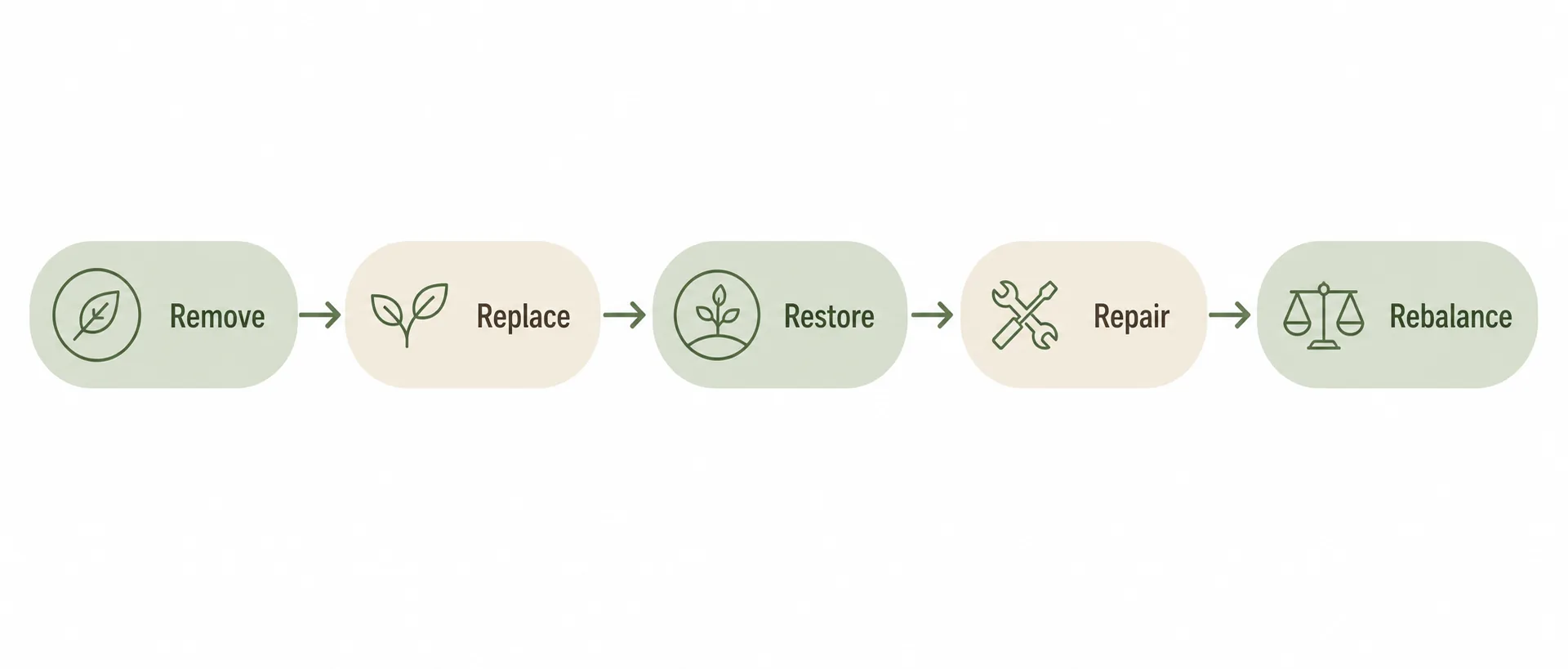
Functional medicine is a structured, established model, not a fringe one. Gut care often follows a simple five-step arc: remove what’s irritating the gut, replace what’s missing for digestion, restore beneficial microbes, repair the lining, and rebalance daily habits like sleep and stress. Monarch works through this same organized approach, tailored to you.
| Step | What it means |
|---|---|
| Remove | What’s irritating the gut |
| Replace | What’s missing for digestion |
| Restore | Beneficial microbes |
| Repair | The lining |
| Rebalance | Daily habits like sleep and stress |
At-Home, Online, and In-Person Options
Here’s the convenient part: many functional gut tests are collected right at home. Stool and breath kits arrive in the mail, and results are reviewed with you over telehealth, no waiting rooms.
One honest caution, though. A test by itself isn’t the value; the interpretation and the plan are. A do-it-yourself kit can leave you staring at pages of data with no idea what to change. What actually moves the needle is having someone connect those results to your symptoms and build a roadmap from them.
What Does Functional Lab Testing Cost?
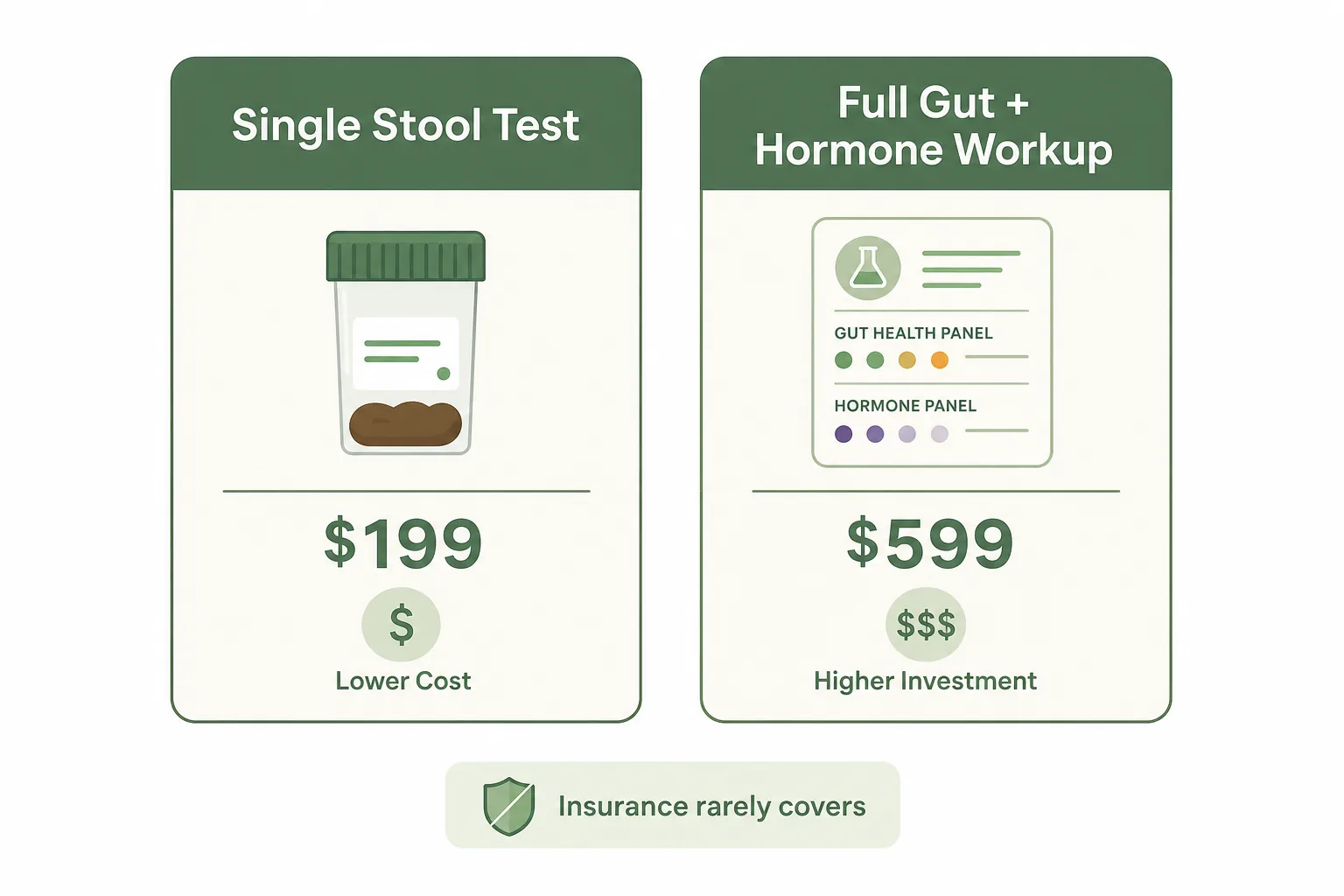
Cost depends on which tests you run and how many, a single stool test looks different from a full gut-and-hormone workup. Many functional practices, including ours, fold testing into a structured program rather than charging test by test, and insurance often doesn’t cover this kind of testing.
It helps to weigh the value, not just the price. One workup that finally explains your symptoms can be worth far more than years of guessing, trying random supplements, and cycling through appointments that end in “everything looks fine.”
Where to Get Functional Lab Testing in Michigan
Monarch Functional Medicine is a licensed Michigan provider offering functional gut testing with full interpretation, not just a results printout. What sets us apart is turning confusion into clarity: we connect your labs, lifestyle, hormones, metabolism, and gut health into one personalized roadmap toward feeling like yourself again.
The best place to start is our 12 Week Reset, testing paired with a guided, step-by-step plan, so you leave with answers and a direction, not just numbers.