
The Short Answer
A first functional medicine appointment often includes a detailed conversation about your health history, symptoms, daily habits, and goals. The provider may review past lab results and discuss whether further evaluation or testing is appropriate. Visit length and next steps vary by practice, so ask what to expect when you book. For Monarch, care is available in person in Marquette and by telehealth across Michigan.
This guide is for adults who want a closer look at ongoing concerns such as fatigue, weight changes, poor sleep, brain fog, digestive symptoms, or hormone and thyroid changes. It may be especially useful if you still have questions after receiving normal lab results.
How a Functional Medicine Visit May Differ From a Routine Appointment
A routine medical visit may focus on a specific concern. A functional medicine consultation may allow more time to review your broader health history and discuss how symptoms, daily habits, and health goals fit together. Each clinician and practice works differently, so ask what their first visit includes.
Functional medicine takes a whole-person approach. The Institute for Functional Medicine explains that practitioners may consider a person’s health history, current concerns, and relevant lifestyle factors when planning care. The term “root cause” describes an investigative approach; it does not mean every symptom will have one identifiable cause.
A provider may ask about areas such as thyroid health, sleep, digestion, stress, nutrition, and hormones. These topics can help shape what to discuss or evaluate next, but symptoms such as fatigue, weight gain, or brain fog can have many possible explanations.
At Monarch Functional Medicine, Julie McDonald, MMS, PA-C, FMACP, leads care. The company describes her background as spanning emergency, family, and internal medicine, with more than two decades of clinical experience. Monarch’s approach combines clinical assessment with individualized support.
Is functional medicine right for you? Practices and providers differ. Ask about the clinician’s license and training, why a test or treatment is being recommended, what it may cost, and how the care fits with your regular medical care. Be cautious of guaranteed outcomes or recommendations that are not clearly explained.
Before Your Appointment: The Strategy Call and Intake
Monarch offers a free 15-minute strategy call for people who want to ask questions before deciding whether to enroll. Use the call to ask about fit, the program, testing, and costs. Book a free 15-minute strategy call.
Ask Monarch whether you should complete intake forms or send records before your appointment. If the practice requests them, complete the forms as accurately as you can so your provider has useful context for the discussion.
What to Gather and Bring
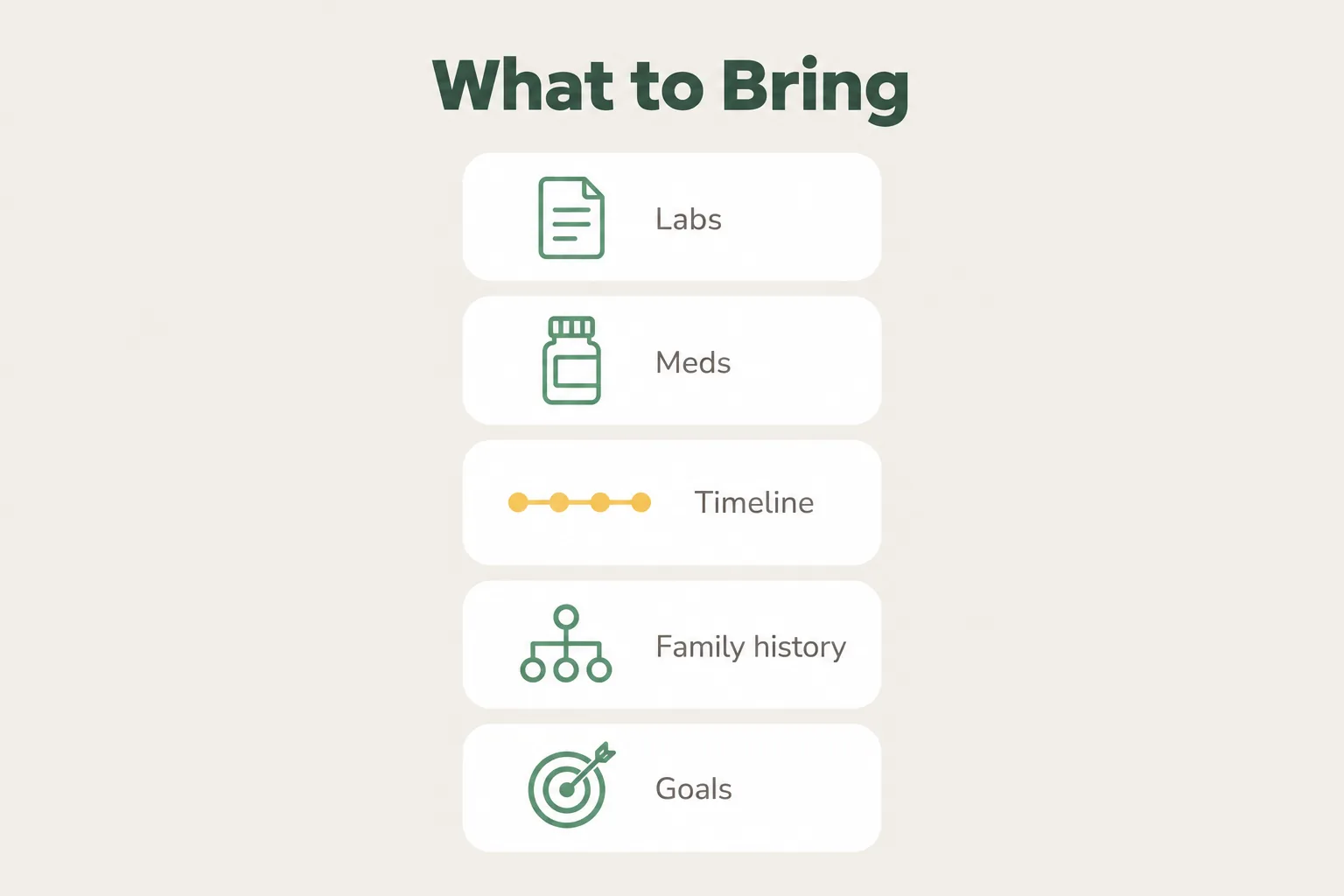
- Recent lab results, including the ones you were told were “normal,” plus any imaging or specialist records
- A list of current medications and supplements, with doses
- A simple symptom timeline: when the fatigue started, when your weight began creeping up, when sleep, your cycle, or digestion changed
- Family health history, especially thyroid conditions, diabetes, and heart disease
- Your top two or three goals, and any questions you don’t want to forget
During the Visit: What Actually Happens

A Deep Dive Into Your Health Timeline
This is not a five-minute intake. Expect questions like: When did you last feel truly well? What was happening in your life the year things shifted? Were there pregnancies, surgeries, illnesses, big moves, a job change, a loss, or new medications around that time?
A timeline can reveal patterns a single snapshot misses. Long stretches of stress and short sleep, for example, might line up with the year cravings, midsection weight gain, and afternoon crashes began. On their own, each symptom looks minor. Together, they start to tell a story. You can see the same history-first approach in what a Monarch metabolic health evaluation for insulin resistance looks like.
Reviewing Your Existing Labs With Fresh Eyes
If you bring previous lab results, the provider may review them alongside your symptoms and health history. A result within a reference range does not answer every health question, but it also does not by itself show that something was missed. Ask what a result means in your situation and whether any follow-up is appropriate.
If thyroid concerns are part of your history, ask which tests were done and whether any further evaluation is appropriate. The clinician should explain the reason for each recommended test and how the result could affect care.
Lifestyle, Nutrition, Sleep, and Stress
Expect questions about a normal day of eating, how you sleep, when your energy dips, how you move, how stressed you feel, and how your digestion behaves.
There will be hormone questions too: changes in your cycle, hot flashes or night sweats, mood shifts, and signs of perimenopause or menopause. These details can provide useful context for the discussion, but they do not identify a cause on their own.
Testing: What Labs May Be Recommended
Testing is personalized. Not everyone gets the same panel, and more testing isn’t automatically better. Depending on your story, your provider may suggest looking at:
- A fuller picture of thyroid function
- Sex hormones, such as estrogen, progesterone, and testosterone
- Blood sugar and insulin
- Markers of inflammation
- Key nutrient levels
- Gut health, when digestive symptoms are part of the picture
If testing is recommended, ask when results are expected, how they will be reviewed, and whether a separate follow-up is needed. The sequence varies by practice and by the tests ordered.
Your Personalized Plan and Follow-Up Appointments
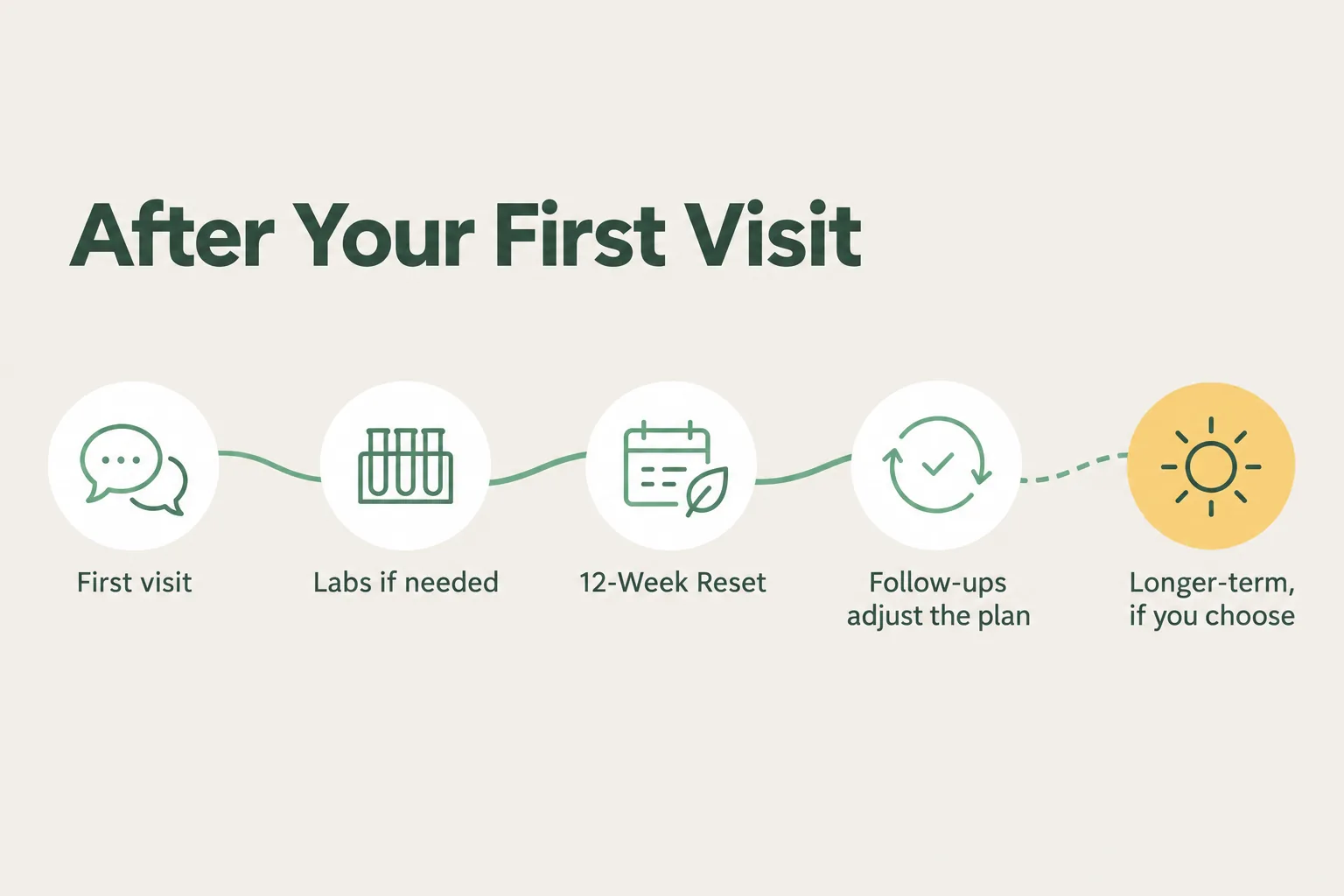
Depending on the practice and your needs, the first visit may focus on gathering information and discussing possible next steps. A more detailed plan may require test results or a follow-up appointment. Ask what to expect before starting care.
Monarch describes the 12-Week Reset as its foundational program and starting point for patients. The site also describes personalized supplement protocols, but ask Monarch how testing, recommendations, and follow-up are sequenced in your own program.
Follow-up visits track how you’re responding and adjust the plan as needed. After the Reset, some patients choose a longer-term program to keep building on their progress. That conversation comes later, based on where you are and what you want.
When Digestive Symptoms Come Up
If bloating, reflux, constipation, diarrhea, or food-related symptoms are part of your health history, describe when they happen and what seems to affect them. Your provider can decide whether they are relevant to the visit and whether any further evaluation is appropriate. You can also read about Cleveland Clinic’s functional medicine intake process, which includes questions about lifestyle, family history, and health goals.
How Long Does Functional Medicine Take?
Follow-up timing depends on your health concerns, the evaluation, and the care plan. Some questions may need lab results or another appointment to address. Ask what follow-up is recommended and how progress will be reviewed.
Monarch’s Reset is structured over 12 weeks. That program length does not guarantee a particular health result or timeline; ask the practice what support and follow-up are included.
Good Questions to Ask a Functional Medicine Doctor
If you’re searching for a functional medicine doctor near you in Michigan, these questions help you compare options:
- Are you licensed to practice in Michigan, and what is your clinical background?
- How long is the first visit, and how long are follow-ups?
- What testing is included, and what costs extra?
- How often will we meet, and how do I reach you between visits?
- Will you coordinate with my primary care doctor?
- Do you offer telehealth?
- What does a typical plan timeline look like?
The Downsides: Cost, Insurance, and Time
Functional medicine isn’t the right fit for everyone, and it’s better to know the trade-offs going in.
- Cost. Some practices work outside of insurance, and specialized testing may not be covered. Ask what is and isn’t included before you start.
- Insurance and Medicare. Coverage varies. Check directly with your plan and the practice about what may be covered.
- Time and effort. This approach asks you to be an active participant. Changes to food, sleep, and stress take real commitment.
- Uneven quality. Practitioners vary, so choosing a licensed clinician with solid medical training matters.
- Not a replacement for urgent care. Functional medicine should not delay urgent or emergency care. Seek immediate medical help for emergencies or severe symptoms.
Signs You’re Ready for a Functional Medicine Appointment
- You’ve been tired for months and rest doesn’t fix it
- You’re gaining weight despite eating well and staying active
- Sleep, brain fog, or mood changes are affecting your daily life
- You suspect hormone or thyroid issues, or you’re navigating perimenopause or menopause
- You’re dealing with ongoing gut issues like bloating or irregularity
- You’ve been told your labs are normal, but you still don’t feel like yourself
- You want a personalized plan and are ready to take an active role
Frequently asked questions
How long is a first functional medicine appointment?
Do I need a referral?
Can I keep seeing my regular doctor?
Is functional medicine covered by Medicare?
Will I have lab tests during my first appointment?
Will I receive a care plan at my first appointment?
Should I stop my medication before my appointment?
Can I see a Michigan functional medicine provider by telehealth?
Your Next Step: From Confusion to Clarity
Your first appointment is a chance to share your health history, describe what concerns you most, and ask what may happen next. You may need further evaluation before a provider can recommend a plan, and no specific result can be promised.
If you’re in Michigan, Monarch’s 12-Week Reset is its foundational program. You can learn more about the program or use the free strategy call link above to ask questions before deciding.