
Some hair, skin, and nail supplements contain high doses of biotin (vitamin B7). Most people never give it a second thought. But taking biotin before a blood test can quietly change the numbers on your lab report. Some of the tests it affects most are the ones people count on to explain fatigue, weight gain, and hormone changes.
This guide reflects the perspective of Julie McDonald, PA-C, co-owner of Monarch Functional Medicine, whose clinical focus includes thyroid and hormone health. Here’s what to know before your next blood draw.
Biotin can interfere with some blood tests, but the risk depends on the dose and the test method. Check supplement labels, tell your provider and lab what you take, and ask how long to pause biotin before your specific test.
Why Biotin Can Throw Off Your Lab Results
Some lab tests use a biotin-based method to measure substances in blood. Extra biotin from supplements can interfere with that method. Depending on the assay, the result may appear falsely high or falsely low.
If an unexpected result does not fit your symptoms or health history, tell your provider about any biotin you take before decisions are made.
The FDA and laboratory organizations have warned that biotin can interfere with certain tests and cause incorrect results. The effect depends on the test method; not every version of a test is affected.
Which Blood Tests May Be Affected by Biotin?
Biotin interference has been reported with some tests that measure:
- Thyroid tests: TSH, free T4, and free T3
- Hormone tests: such as cortisol, testosterone, estradiol, FSH, LH, and PTH (a hormone that controls calcium)
- Troponin: the blood marker used to check for a heart attack
These are examples, not a guarantee that every lab method for these tests is affected. Laboratories use different testing platforms, and susceptibility varies by assay.
Troponin interference can be a serious safety concern. The FDA has identified troponin assays that may be affected by biotin.
If you may be having a heart attack or another emergency, seek care immediately and tell the care team about any biotin you take. Do not delay urgent care to wait for a supplement washout.
Hormone results are already sensitive to timing, sleep, stress, and medications. If you’re curious about the other factors in play, see Monarch’s overview of cortisol and stress hormones. Biotin simply adds one more layer.
Labs also don’t all use the same equipment. The same supplement might skew a result at one lab and barely register at another, so “it’s probably fine” isn’t a safe assumption.
How Biotin Can Mimic a Thyroid Problem
Thyroid labs are where biotin creates some of the most confusing pictures. On some assay methods, biotin can cause a pattern that looks like an overactive thyroid: a falsely low TSH with falsely high T4 or T3. The pattern depends on the testing method and does not prove that the thyroid is overactive.
The American Thyroid Association explains that biotin can make some thyroid results appear abnormal even when thyroid function is normal.
If you’re already dealing with thyroid symptoms, a false lead like that is the last thing you need. Accurate labs are the starting point for connecting the dots.
Can Biotin Affect Every Blood Test?
No. Biotin affects certain tests that use susceptible assay methods; it does not affect every blood test. Many CBC and cholesterol methods do not use the same biotin-based chemistry, but the lab’s method matters. Some ferritin assays may also be susceptible. Tell your provider and lab about biotin use so they can check the specific tests ordered.
The simplest rule: tell whoever orders your labs about every supplement you take.
How Much Biotin Is Too Much for Lab Tests?
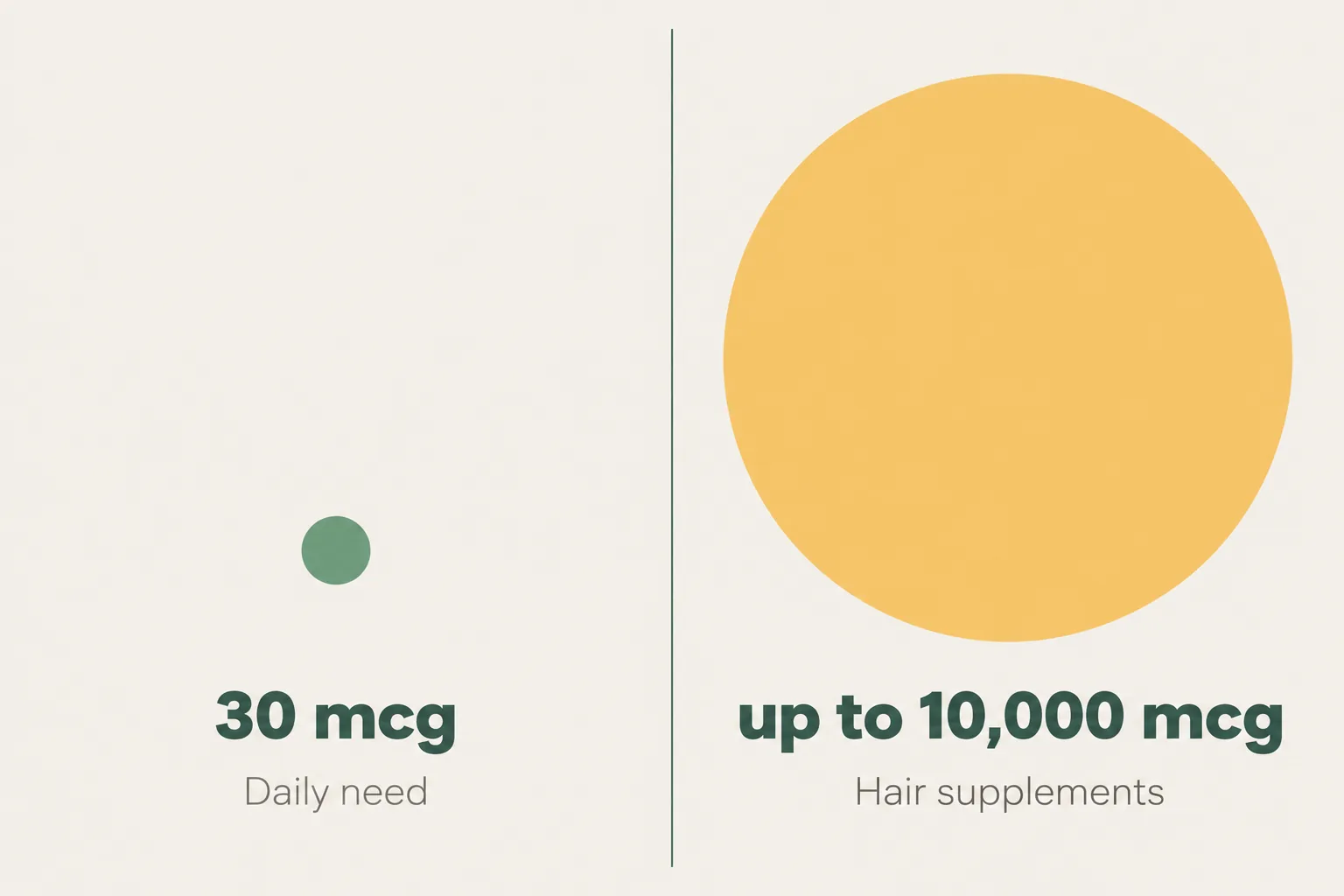
Your body needs only a tiny amount of biotin each day, and standard multivitamins usually contain low amounts that are less likely to cause problems.
The bigger concern is beauty and specialty products. The NIH Office of Dietary Supplements lists an adequate intake of 30 micrograms (mcg) per day for adults. Some hair, skin, and nail products contain 5,000 to 10,000 mcg, far more than that daily intake. There is no single dose that guarantees interference; the risk depends on the person, timing, and test method.
Many people start biotin because of thinning hair, which can itself be a clue to thyroid, hormone, or nutrient issues. A hair loss evaluation that looks beyond the scalp is designed to find the reason behind the shedding.
Label tip: look for “biotin,” “vitamin B7,” or “vitamin H,” including in hair gummies, prenatal vitamins, and B-complex blends.
How Many Days to Stop Biotin Before Bloodwork
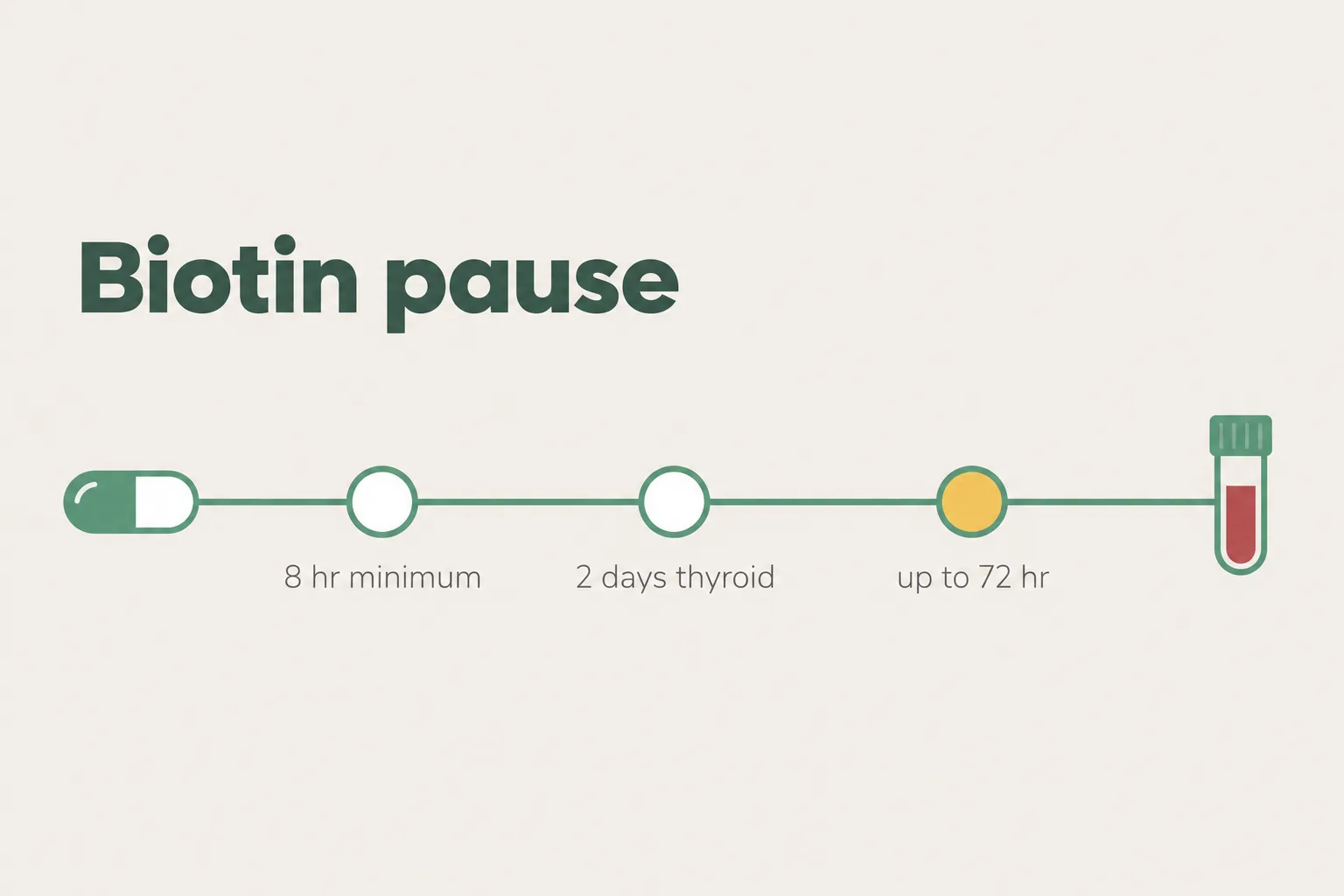
There isn’t one pause period that applies to every blood test. Timing depends on your dose and the lab method. AACC guidance says people taking 5–10 mg of biotin should wait at least 8 hours before testing, while more sensitive assays may require a longer interval, up to 72 hours. The American Thyroid Association advises avoiding biotin for at least 2 days before thyroid testing. Your provider’s or lab’s instructions should guide your specific test.
If you take prescribed high-dose biotin, contact the prescriber before changing it. A longer pause may be needed for very high doses or certain medical situations.
A simple pre-lab checklist:
- Check every supplement label for biotin.
- Note the dose in micrograms (mcg) or milligrams (mg).
- Write down when you last took it.
- Ask the ordering provider or lab how to prepare for your specific test.
- Tell both the lab and your provider what you take.
What If I Already Took Biotin Before My Blood Test?
Don’t hide it or automatically cancel your appointment. Tell the ordering provider and lab what product you took, the dose, and when you last took it. They can decide whether to proceed, use a different test method, or reschedule. If you need urgent evaluation, tell the care team right away and don’t delay care.
Other Vitamins and Habits to Review Before a Blood Test
Biotin is the best-known supplement for skewing lab results. Whether other vitamins matter depends on the test being run.
Habits count too. Fasting, sleep, time of day, and medications can all shift certain results, especially hormones like cortisol. Follow the preparation instructions for your specific test, and share a complete list of medications and supplements with your provider. Do not stop other supplements or medication unless your provider tells you to.
Is There a Blood Test for Biotin Itself?
Yes, biotin levels can be measured, but the test isn’t routinely ordered. Reviewing supplements before testing usually makes it unnecessary. If results don’t match how someone feels, a careful provider will ask about biotin early.
Why Accurate Labs Matter in a Root-Cause Approach
Fatigue, brain fog, weight changes, and thinning hair often lead straight to thyroid and hormone testing, the very tests biotin can distort. One misleading result can send the search for answers in the wrong direction.
Julie McDonald, PA-C, considers symptoms, health history, supplements, and lab results together. If results and symptoms don’t line up, the testing method and supplement history may be part of the discussion. This reflects Monarch’s personalized, root-cause approach. If low energy is your main concern, here’s what a personalized fatigue evaluation may include.
This article is educational. Talk with a licensed provider before changing supplements or interpreting your own results.
Frequently asked questions
Does biotin affect blood test results?
How long should I stop biotin before bloodwork?
I took biotin before my blood test. Should I cancel it?
Can biotin make thyroid test results look like hyperthyroidism?
Should I stop prescribed biotin before lab work?
Start With Clarity: The 12 Week Reset
If you’re in Michigan and still struggling with thyroid or hormone symptoms despite “normal” labs, you don’t have to keep guessing. The 12 Week Reset is the starting point for every Monarch patient, a personalized first step designed to look at your symptoms, history, and labs together.
Learn more about the 12 Week Reset and how Monarch supports patients across Michigan.