
Functional medicine and mitochondrial support for energy are best understood as a personalized way to explore possible contributors to persistent fatigue, while recognizing that fatigue can have many different causes.
Persistent Fatigue After “Normal” Labs: What to Check Next
You set the alarm early so you can hit snooze twice. Coffee gets you through the morning, you hit a wall around two, and by the time dinner is cleared, you are counting the minutes until you can lie down. You had bloodwork drawn. Everything looked normal. Maybe you were told it is stress, or age, or what a full life feels like at 45.
That answer rarely sits right, because you live in your body. This is not the pleasant heaviness that follows a long hike. It is flat, unrefreshed exhaustion that sleep does not fix, paired with brain fog, a shorter fuse, and a growing list of things you used to do easily and now avoid.
Here is the gap that traps so many people: standard lab panels are built to catch disease. They are excellent at flagging anemia, an out-of-range thyroid value, or a kidney problem. Routine tests can identify many important conditions, but they do not explain every reason a person may feel persistently fatigued. Fatigue can involve sleep, nutrition, medications, mood, thyroid or metabolic conditions, infection, and other health factors. For a related Monarch perspective, read about why normal lab results may not explain persistent symptoms.
That space is where the more useful question gets asked. Not “what symptom do you have?” but “why is this happening?” What follows is a plain-language map of how your body makes energy, what interferes with it, and which nutrients, foods, and habits genuinely support the process.
What Mitochondria Do, and What They Can’t Explain on Their Own
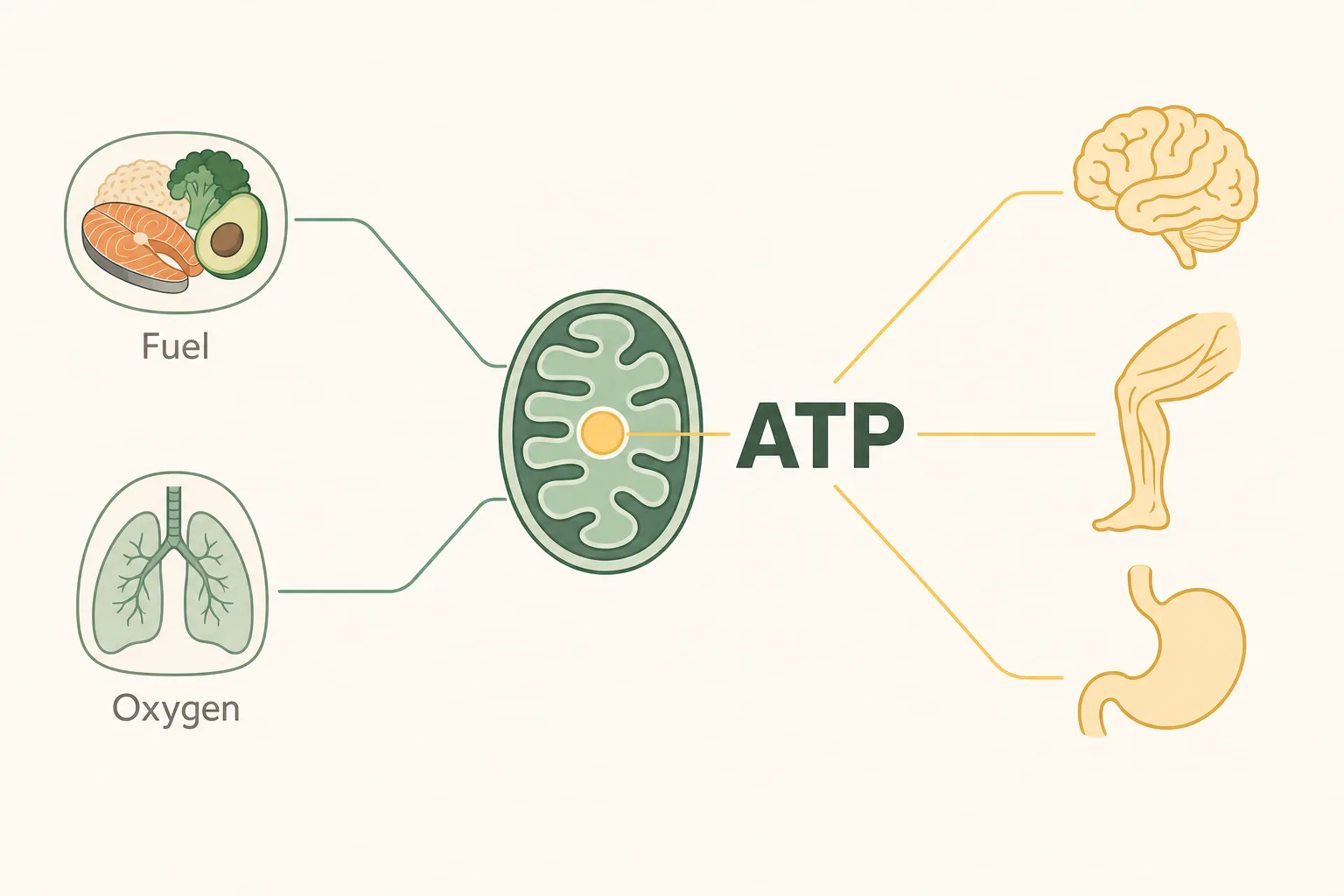
Inside almost every cell in your body sit tiny structures called mitochondria. Their job is to take the food you eat and the oxygen you breathe and turn them into a usable form of energy called ATP. Think of ATP as the currency your cells spend on everything: contracting a muscle, firing a thought, digesting lunch, making a hormone, repairing tissue overnight. The National Institutes of Health explains how mitochondrial health relates to energy, movement, sleep, and diet.
So yes, mitochondria really do give you energy, but not the way a battery does. They hold no reserve you can draw down. They manufacture energy continuously, on demand, day and night. Mitochondria continuously help cells produce ATP, but fatigue is not specific to mitochondrial problems. Changes in cellular energy production are only one possible part of a broader clinical picture.
They hold no reserve you can draw down. They manufacture energy continuously, on demand, day and night.
The tissues with high energy demands rely heavily on mitochondrial activity. When energy production is affected, symptoms may involve several systems, but fatigue and brain fog are not specific to mitochondrial problems. Brain fog and word-finding trouble. Legs that feel heavy on the stairs. Digestion that has turned sluggish and unpredictable. Periods that changed. A mood that flattened. Seen together, these symptoms may point to overlapping contributors, but they do not identify a single cause on their own.
A simple way to picture it: your cells run a small power plant, and a power plant can be affected by fuel, demand, recovery, illness, medication, or other health factors. Different people may experience different combinations of these pressures, which is why persistent fatigue needs context rather than a one-size-fits-all explanation.
Mitochondrial Support Is Not the Same as Mitochondrial Disease
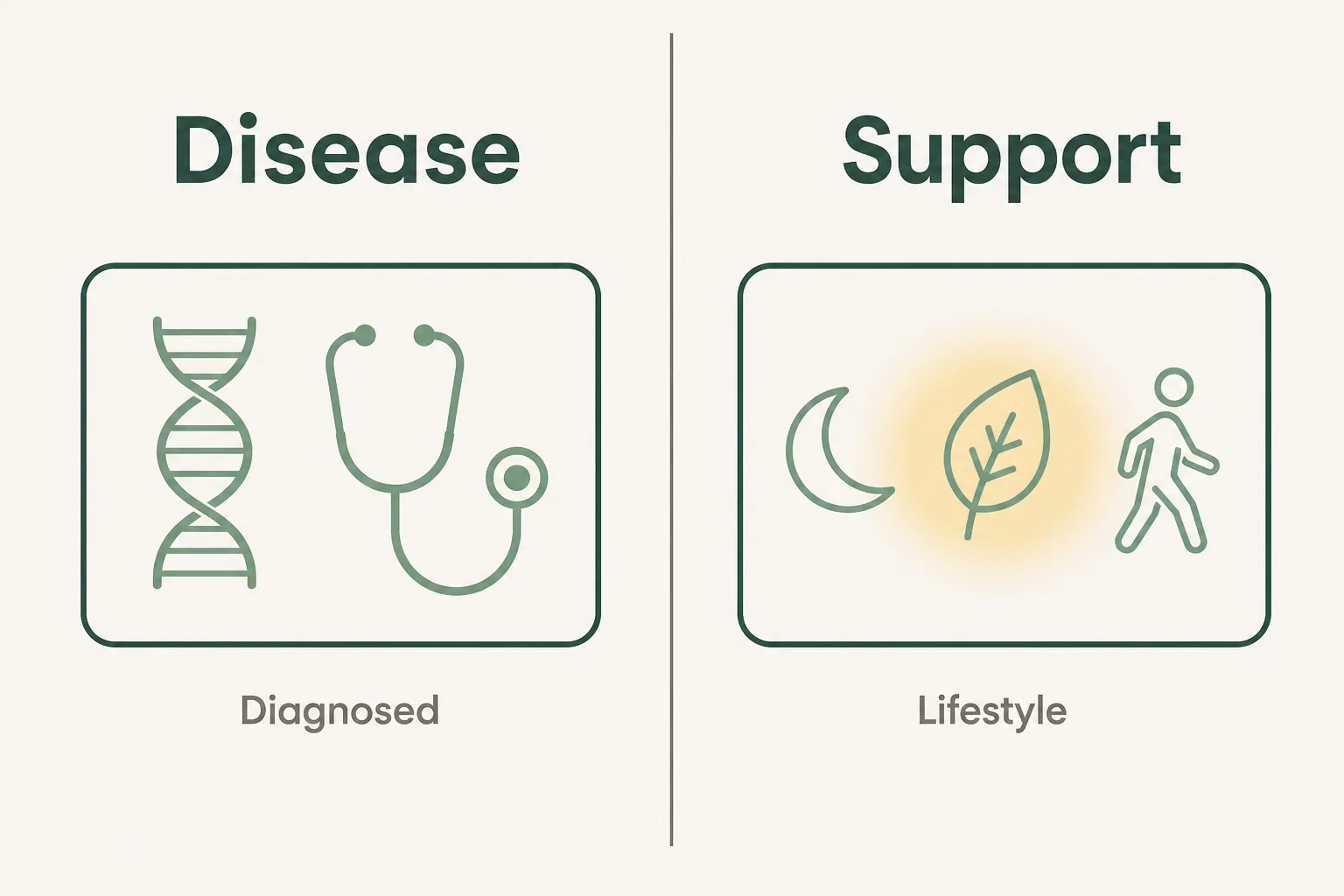
Primary mitochondrial diseases are genetic conditions that require appropriate medical evaluation. General mitochondrial support is an educational term for lifestyle, nutrition, and clinical strategies that may support cellular energy; it is not a diagnosis. The Cleveland Clinic explains the difference between mitochondrial disease and secondary mitochondrial dysfunction.
Fatigue, brain fog, or low exercise tolerance alone do not diagnose mitochondrial disease. Severe, progressive, or multi-system symptoms require appropriate medical care rather than self-directed supplements.
What Can Affect Mitochondrial Function?
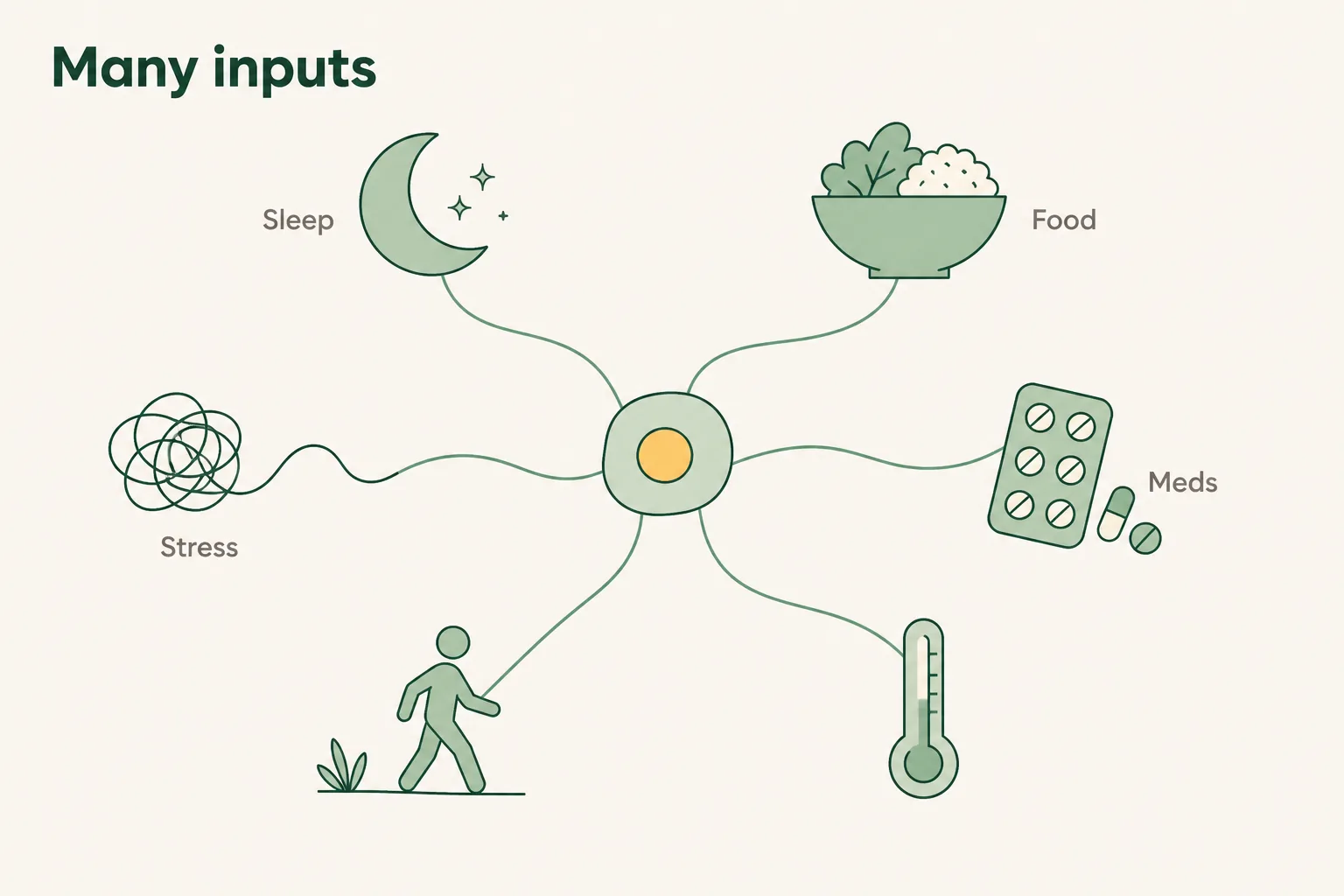
Mitochondrial function can be influenced by multiple factors, including sleep, nutrition, metabolic health, illness, medications, and physical activity. The relationship is complex, and fatigue alone does not show that mitochondria are the primary problem.
Possible contributors include poor or interrupted sleep, nutritional deficiencies, metabolic changes, illness, medication effects, prolonged inactivity, and stress. Gut symptoms, thyroid conditions, and hormonal changes may also be relevant for some people, but none of these factors should be assumed to explain fatigue without clinical context.
The Institute for Functional Medicine notes that mitochondrial dysfunction may contribute to fatigue, but the relationship is still being studied and should be considered within the broader health picture.
Then the loop closes on itself. Low energy can make movement harder, and less movement may affect conditioning. Caffeine, irregular meals, and poor sleep can also reinforce a cycle of feeling depleted. Six months later, you may be more tired than you were, even when nothing obviously “happened.”
This is why hormones, thyroid function, metabolism, and gut health may come up in a fatigue evaluation. They can influence energy, sleep, appetite, digestion, and recovery, but they are not the only possible explanations.
How Hormones, Thyroid, Gut Health, and Metabolism May Relate to Energy
Thyroid may affect the pace of energy use. Thyroid conditions can involve fatigue, feeling cold, changes in bowel habits, hair changes, or difficulty concentrating. These symptoms overlap with many other conditions, so a thyroid-related evaluation should be based on symptoms, history, and appropriate testing rather than one symptom alone.
Perimenopause can change the terrain. Hormonal changes may affect sleep, mood, temperature regulation, recovery, appetite, and body composition, but symptoms vary from person to person. They are worth discussing when they persist or interfere with daily life.
For men, hormone, sleep, metabolic, and muscle factors can overlap. Changes in testosterone may be associated with low drive, slower recovery, or changes in muscle, but these symptoms have other possible causes and require individualized evaluation.
Gut symptoms may be relevant to energy. Digestive symptoms or impaired absorption may contribute to nutrient gaps, but low stomach acid, microbiome imbalance, and gut inflammation should not be assumed without appropriate clinical context. For more on this relationship, read about how gut health may relate to hormone balance.
Stress and sleep can affect “tired but wired” patterns. Trouble falling asleep, waking during the night, or feeling alert at bedtime can have several causes. A detailed history can help determine what deserves further attention.
For some people, fatigue reflects overlapping hormonal, thyroid, metabolic, digestive, sleep, nutritional, or stress-related factors; mitochondrial function may be one part of that broader picture.
When Persistent Fatigue Deserves a Closer Look
Ordinary tiredness responds to rest. A hard week, a bad night, a stretch of travel, then a few solid nights of sleep put you back to baseline. That is normal.
What deserves a closer look is a pattern that persists:
- Exhaustion that sleep does not relieve, week after week
- Feeling worse the day after exercise or a busy day, rather than better
- Brain fog, poor concentration, or trouble finding words
- Muscles that feel heavy or ache without a clear cause
- Poor tolerance for activity you used to handle easily
- Low mood or a flat, motivation-free feeling
- Feeling cold when nobody else does
- Weight gain without a change in habits
- Leaning on caffeine or sugar to get through predictable parts of the day
One or two of these symptoms alone may mean very little. Several together can justify a closer conversation with a qualified provider, but this list is not a diagnostic tool.
What a Personalized Fatigue Evaluation May Include
A personalized evaluation starts with symptoms, history, medications, lifestyle, and clinical findings, not a predetermined testing list. A result within a laboratory’s reference range may not explain every symptom, but it should not automatically be treated as proof that disease was missed.
Depending on your symptoms, history, medications, and clinical findings, a provider may consider:
- Thyroid-related markers when clinically indicated
- Iron studies, including ferritin, when appropriate
- B12 and folate when relevant
- Vitamin D status when risk factors or symptoms make it relevant
- Magnesium status when clinically indicated
- Glucose and insulin-related markers when appropriate
- Markers of inflammation when relevant
- Cortisol-related evaluation only when clinically appropriate
- Hormone evaluation in the context of age, symptoms, and reproductive stage
- Digestive symptoms and possible absorption concerns when indicated
Labs are only half of it. The history often carries more information: when the fatigue started, what was happening in your life that year, how you sleep, when and what you eat, how much you actually move, which medications and supplements you take, whether there was an illness you never quite bounced back from. Two people can walk in with identical exhaustion and leave with entirely different plans, because the causes underneath were different.
That is the real work of connecting the dots between labs, lifestyle, hormones, metabolism, and gut health. Not more tests for the sake of more tests, but enough of the right information to explain the pattern you have been living with. If digestive symptoms are part of the picture, you can also read Monarch’s overview of functional medicine testing for gut issues.
Mitochondrial Support: Nutrients, Food, and Clinical Context
Your cells need specific raw materials to make energy, and when one runs short, the whole line slows. The following nutrients are discussed in relation to mitochondrial function, but evidence, indications, doses, and safety vary. The Institute for Functional Medicine’s nutrient overview provides additional context and references.
| Nutrient | What the text says |
|---|---|
| CoQ10 | Has a role in cellular energy production and has been studied in some health conditions. |
| B vitamins | Support enzyme reactions involved in turning food into usable energy, but more is not automatically better. |
| Magnesium | Participates in many body processes, including reactions involved in ATP production. |
| Alpha-lipoic acid | Has antioxidant activity, but its use depends on the person and the clinical context. |
| L-carnitine | Helps transport fatty acids for energy use, but supplementation is not appropriate for everyone. |
| PQQ | Has been studied in relation to mitochondrial biogenesis, but clinical evidence is less established than its marketing often suggests. |
| Creatine | Supports short-burst energy in muscle and should be considered in light of overall health and medication use. |
| Omega-3 fats | Support cell membranes and general health; they should not be presented as a direct treatment for unexplained fatigue. |
| Iron | Supports oxygen transport, and low iron stores can contribute to fatigue; testing and clinician guidance matter before supplementation. |
A few honest caveats, because this is where money gets wasted.
There is no single best mitochondrial-support supplement, and supplements are targeted tools rather than a universal starting point. Taking CoQ10 when your real issue is low ferritin and five hours of sleep may not address the main contributor.
When testing is clinically appropriate, it can help determine whether a supplement addresses an identified deficiency or risk; it does not make every supplement necessary.
Food comes first where it can. Leafy greens, nuts, seeds, and legumes for magnesium. Fatty fish for omega-3s. Eggs, meat, and fish for B12 and carnitine. Colorful vegetables and berries for antioxidant protection. Real food delivers these nutrients alongside the cofactors that help you use them.
Bring your full medication list to any evaluation. Some prescriptions influence nutrient levels over time, and that is a conversation to have with the provider who prescribed them rather than a reason to stop anything on your own. People who are pregnant, breastfeeding, managing a medical condition, or taking medications should ask a qualified clinician before starting a supplement.
Quality and dose vary enormously between products, and more is not better. Supplements may support energy production as part of a broader plan, but they do not replace addressing sleep, stress, blood sugar, thyroid function, or gut health.
Related readingThe Role of Oxidative Stress in Aging and How to Prevent It – Monarch Functional MedicineRead the guide →Eating for Steady Cellular Energy
There is no single “mitochondria diet.” A balanced eating pattern can support overall energy and metabolic health, but food cannot diagnose or correct every cause of fatigue.
Adequate protein at meals can support muscle and help some people manage hunger and energy swings. If your morning is coffee and a granola bar, adding a more balanced meal may be a practical place to start.
Color on the plate. Deeply colored vegetables and fruit supply antioxidant compounds that help protect cells from the daily wear of energy production. Variety matters more than any single superfood.
Real fats. Olive oil, avocado, nuts, seeds, and fatty fish support cell membranes and help meals keep you full longer.
Reducing added sugars and highly processed foods may help some people avoid large energy swings, but fatigue should not be attributed to food alone.
Meal timing is individual; if an overnight eating break is considered, it should fit your nutrition needs, medications, sleep, pregnancy status, and clinical guidance. Aggressive fasting is a different matter. Long fasts can backfire for women in perimenopause, anyone under heavy stress, and people with thyroid issues, sometimes worsening sleep, mood, and cycles. If a fasting approach is making you feel worse, that is information, not failure.
Not eating enough can contribute to low energy. Adequate food and water are part of the foundation, but persistent fatigue still deserves appropriate evaluation.
Simple changes that fit real life are more sustainable than an elaborate plan you cannot maintain.
Movement That Can Support Mitochondrial Health
Regular movement can support fitness and metabolic health, but the amount and intensity should match your current capacity. There is no single best workout for everyone.
Easy, conversational cardio. Walking or cycling at a comfortable pace can be a reasonable starting point for some people. Duration and frequency should be individualized.
Strength training. Resistance exercise can support muscle, bone, and metabolic health, but the appropriate frequency and load depend on your current fitness, symptoms, and recovery.
Short intervals, only when appropriate. Brief harder efforts may fit some people after they have established a stable base and can recover without worsening symptoms.
If you reliably feel worse a day or two after exertion, do not assume that pushing harder is the answer. Use the medical-evaluation guidance below and seek clinical advice before increasing intensity.
The lowest-barrier entry point of all may be a short, comfortable walk, but even that should be adjusted if it causes delayed symptom worsening.
Sleep, Stress, and Recovery: The Unglamorous Half
Sleep supports recovery, attention, mood, and overall health. Short or fragmented sleep undercuts every supplement listed above, which is why sleep is not the boring afterthought of an energy plan. It is the foundation.
Practical levers that work for busy adults:
- Keep a consistent wake time, weekends included. Your body clock anchors to when you get up, not when you go to bed.
- Get outside within an hour of waking, even for five minutes on a gray day. Morning light sets the timing for everything after it.
- Set a caffeine cutoff, generally by early afternoon. Caffeine lingers longer than most people assume.
- Keep the bedroom cool and genuinely dark.
- Be honest about alcohol. It may help you fall asleep, but it reliably degrades the sleep that follows.
Stress works on the same system from another direction, keeping the body in a spending state that prioritizes immediate output over repair. You cannot delete the stressors in real life, but you can create moments where the body registers safety: a few minutes of slow breathing with a longer exhale, a short walk outdoors without your phone, a hard boundary on evening screens, an actual lunch break away from the desk. Small and daily beats ambitious and abandoned.
When Fatigue Needs Medical Evaluation
Seek prompt medical care for fatigue that begins suddenly, is severe, or worsens quickly, especially when it occurs with chest pain, shortness of breath, fainting, unexplained weight loss, severe weakness, or new neurological symptoms.
If symptoms worsen 12–48 hours after physical or mental activity, this may be post-exertional malaise. The CDC explains why pacing and staying within an individual energy envelope may help prevent worsening.
This article is educational and cannot determine whether a symptom is caused by mitochondrial dysfunction, a medical condition, or another factor.
How Long Does It Take to Feel Better?
Everyone wants this answered, and the honest answer is that it depends on what has been driving the problem and how long it has been running.
Some people notice changes after addressing an identifiable contributor; others need longer-term evaluation and support. The timeline varies by cause, health status, and treatment plan.
Sequence tends to matter more than intensity. Remove what is draining the system first, which may include sleep problems, stress load, blood-sugar swings, or an untreated health issue. Fill identified gaps next, guided by appropriate evaluation rather than guesswork. Build capacity gradually, with movement that matches where you currently are.
The approach that wastes the most time is starting ten supplements on the same Monday. If you feel better, you do not know which one helped. If you feel worse, you do not know what to stop.
Fewer changes, introduced deliberately, teach you far more about your own body. Progress is not always linear, and the timeline depends on the cause and the plan.
Frequently asked questions
How do you boost mitochondrial energy?
How do you treat mitochondrial fatigue?
Do mitochondria actually give you energy?
What supplements are best for mitochondrial support?
Can improving mitochondrial health help with weight loss?
Are mitochondrial health peptides worth considering?
Can you support mitochondrial health naturally?
How do I know if my fatigue is thyroid, hormones, or something else?
Can mitochondrial support diagnose mitochondrial disease?
Can mitochondrial function be tested?
How Monarch Can Help With Persistent Fatigue
Persistent fatigue that affects daily life deserves a thoughtful evaluation rather than another energy drink or an unstructured supplement stack.
If you are in Michigan and want help sorting through persistent fatigue, book a free 15-minute strategy call. Monarch’s 12-Week Energy, Hormone & Metabolism Reset is a structured discovery entry point for eligible new patients; the appropriate next step depends on your history, goals, and clinical fit.
This article was written under the clinical direction of Julie McDonald, MMS, PA-C, FMACP, founder and lead provider at Monarch Functional Medicine. Her background includes Emergency, Family, and Internal Medicine.
Monarch Functional Medicine serves patients in Michigan, with in-person care in Marquette and virtual care available across Michigan.
This content is educational and is not medical advice, a diagnosis, or a promise of specific results. Individual outcomes vary. Please seek individualized evaluation from a qualified healthcare provider before starting, stopping, or changing any supplement, medication, or health program.