
So, how does functional medicine address cortisol and stress hormones? It starts with a review of symptoms, sleep, medications, daily habits, related health factors, and whether additional testing is clinically appropriate. Some practices use multi-timepoint saliva or urine testing to explore daily patterns, while condition-specific medical testing may be appropriate when adrenal disease is suspected. No symptom list or wellness panel can diagnose a condition on its own.
Why One Cortisol Result May Not Tell the Whole Story
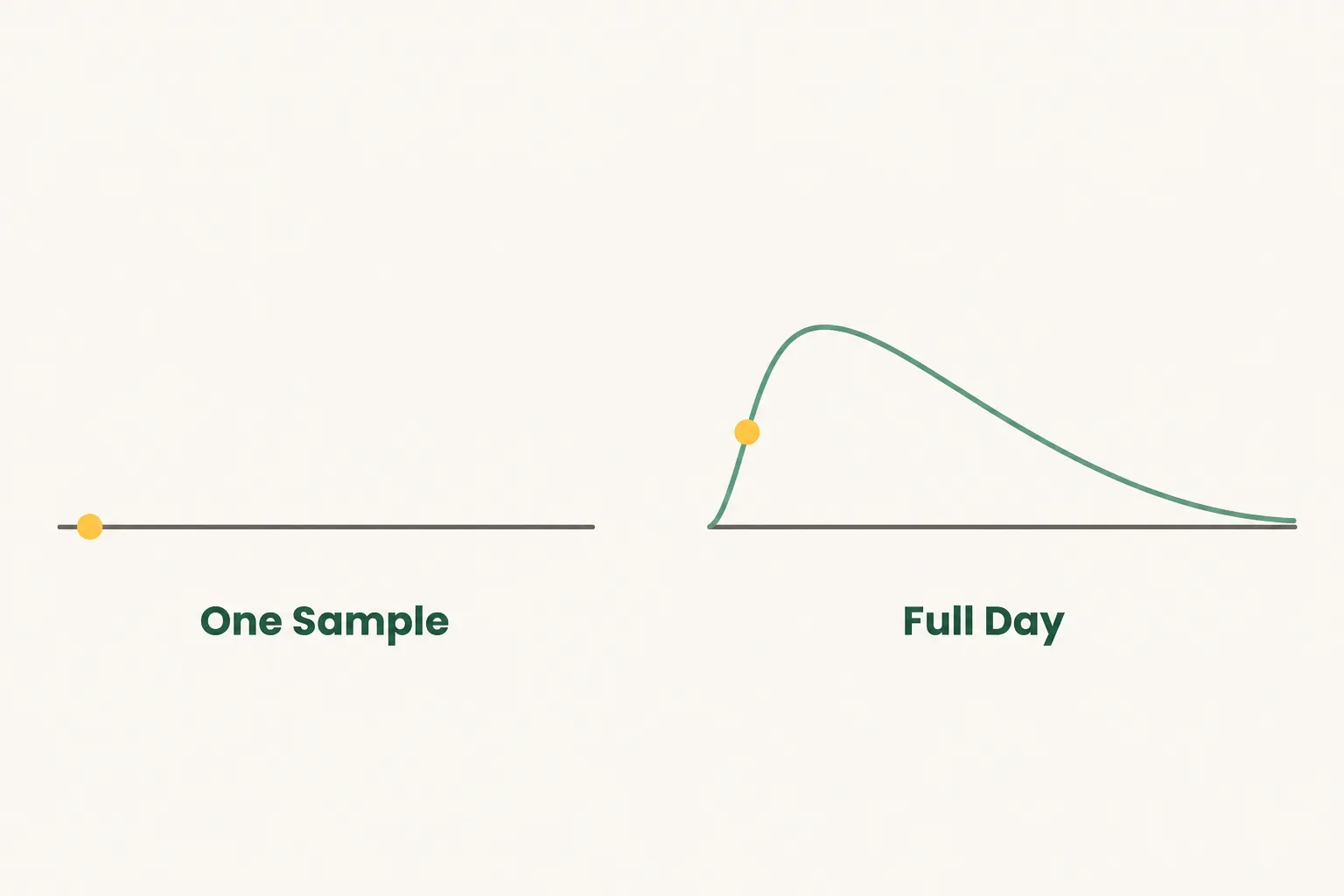
You wake at 7 am feeling like you never slept, need coffee before you can hold a conversation, crash at 3 pm, then catch a second wind at 10 pm when you finally want to rest. Weight is settling around your middle even though your eating hasn’t changed. And the lab result says everything is fine.
Here is the problem with that result. Cortisol is supposed to change hour by hour. A single morning blood test cannot show the full daily cortisol pattern. If a clinician is evaluating a possible adrenal disorder, the appropriate test depends on the suspected condition; multi-timepoint saliva or urine testing may be used in some functional-medicine settings to explore patterns, but it does not diagnose “adrenal fatigue.”
In more than two decades across family medicine, emergency medicine, and functional medicine, I have worked with people whose symptoms persist even when routine results fall within a reference range. Functional medicine looks at the whole stress-response system rather than one value: what gets tested, what is driving the numbers underneath, and what a personalized plan actually changes.
Related readingAdrenal Fatigue Treatment | Functional Medicine | Monarch FMRead the guide →Cortisol in Plain English: Your Body’s Daily Energy Dial
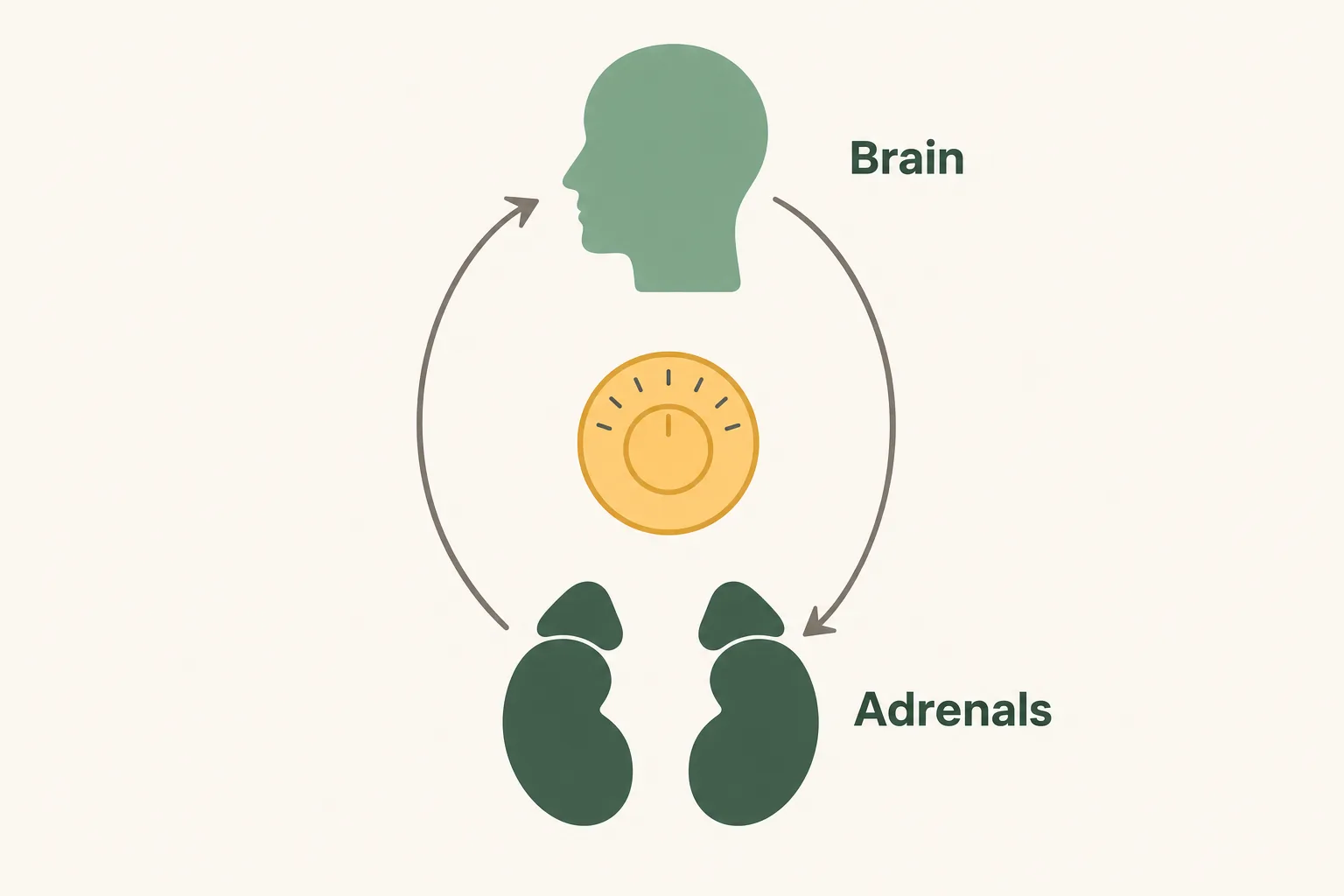
Cortisol isn’t the villain it’s made out to be. It helps you wake up, holds blood sugar steady between meals, and keeps inflammation in check.
In a healthy pattern, it rises shortly after you wake, tapers through the day, and bottoms out at night so melatonin can take over. That daily rise and fall is your diurnal rhythm: the shape of your hormone curve across 24 hours.
It’s a feedback loop between your brain and your adrenal glands, often called the HPA axis. Think of a thermostat. It reads how much pressure your body is under and adjusts output. Chronic stress can affect sleep, blood sugar, mood, and the body’s stress-response systems, but symptoms alone cannot show whether cortisol is high, low, or normal.
What counts as pressure is broader than most people expect. Emotional stress is part of it, and so are skipped meals, short sleep, gut inflammation, chronic pain, over-exercising, and blood sugar that spikes and crashes all day. These factors may contribute to stress-related symptoms, but they do not establish a cortisol disorder.
Signs Your Cortisol Rhythm May Be Off
People often associate weight gain around the middle, a wired feeling at night, a racing mind at 3 am, sugar and salt cravings, jaw tension, rising blood pressure, and frequent illness with high cortisol, but these symptoms are nonspecific and do not, by themselves, show that cortisol is high.
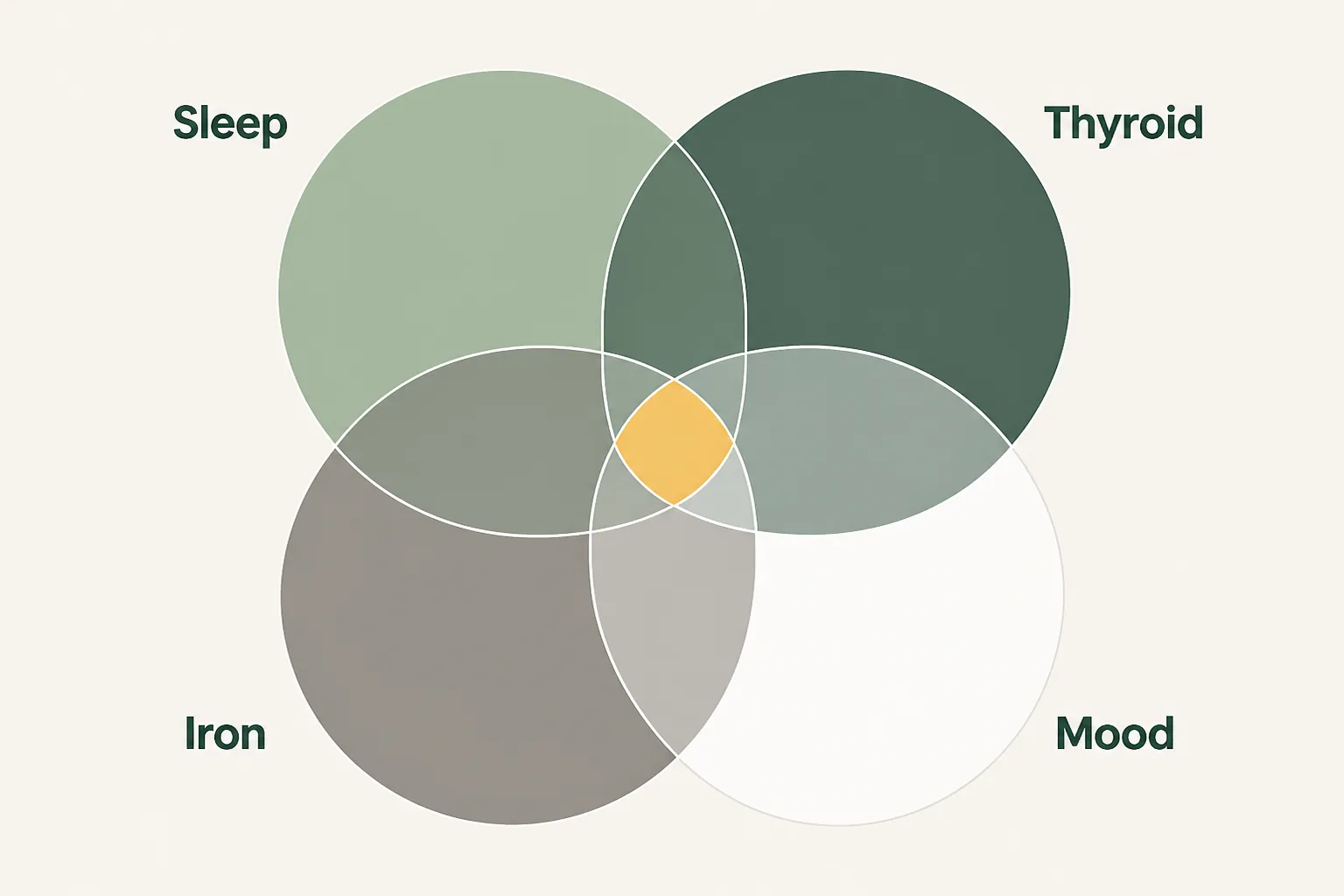
People also describe heavy morning fatigue, a strong reliance on caffeine, an afternoon crash, poor recovery from workouts, and irritability when they believe their cortisol rhythm is “flat.” The same symptoms can occur with sleep disorders, thyroid conditions, anemia, medication effects, mood concerns, and other health issues.
Cortisol often becomes dominant, suppressing sex hormones and driving belly fat. Over-restricting diet and increasing cortisol. Optimizing deep …Read on LinkedIn ↗
During perimenopause and menopause, changing hormones and disrupted sleep can overlap with stress-related symptoms. A hormone health evaluation and, when appropriate, a thyroid evaluation may help assess overlapping concerns. Add the overlap with insulin resistance, low iron, or low B12, and you can see why testing one system at a time may not provide the full context.
Step One: Choosing the Right Cortisol Test for the Clinical Question
If the clinical question is about daily timing, multiple samples may be considered, but testing should be selected based on the condition being evaluated.
Some functional-medicine practices use several saliva samples across the day to describe a cortisol pattern. Results can be affected by collection timing, medications, shift work, illness, and the assay used. This type of pattern testing should not be presented as a stand-alone diagnosis.
Dried urine panels may measure cortisol metabolites and other hormones. They can add context in some functional-medicine evaluations, but results should be interpreted with the specific test method and clinical question in mind; they should not be presented as a direct measure of adrenal disease or “cortisol clearance.”
What we do with results matters more than the test itself. A result may prompt different clinical questions, but no single pattern determines a treatment plan.
Depending on your symptoms, standard testing may include morning cortisol, thyroid markers, blood sugar markers, ferritin, vitamin levels, or other tests selected by a clinician.
These tests may provide context or help identify conditions that require standard medical evaluation; they rarely explain nonspecific symptoms by themselves.
This is diagnostic work, not a chart to self-interpret. These tests should be interpreted by a qualified clinician. Read Monarch’s functional medicine lab-testing overview for more information about the broader testing process.
How Cortisol Tests Differ
The right test depends on the clinical question. A test used to investigate adrenal insufficiency or Cushing syndrome is different from a wellness-oriented panel intended to describe daily patterns.
| Test | What it measures | When it may be considered | What it cannot tell you by itself |
|---|---|---|---|
| Morning serum cortisol | Cortisol at one time point | May be part of an evaluation for adrenal insufficiency | Does not show the full daily rhythm |
| ACTH stimulation test | How the adrenal glands respond to ACTH | Commonly used when adrenal insufficiency is suspected; NIDDK explains the diagnostic process. | Requires clinical ordering and interpretation |
| Late-night salivary cortisol | Cortisol late in the day | One test used in appropriate evaluations for Cushing syndrome | Is not a general wellness screening test |
| 24-hour urinary free cortisol | Cortisol excreted in urine over 24 hours | May be used in appropriate evaluations for Cushing syndrome | Requires correct collection and interpretation |
| Multi-timepoint saliva or urine panel | May describe daily patterns or hormone metabolites | May add context in some functional-medicine evaluations | Is not a stand-alone diagnosis |
The Endocrine Society’s Cushing syndrome guideline recommends condition-appropriate testing rather than broad screening based only on common symptoms such as fatigue or weight changes.
When to Seek Medical Evaluation
Fainting, severe weakness, repeated vomiting, dehydration, confusion, very low blood pressure, purple stretch marks, easy bruising, progressive muscle weakness, or rapidly changing symptoms deserve prompt medical evaluation. These signs can have multiple causes and do not prove a specific cortisol disorder.
What Can Affect Cortisol Test Results?
Timing, shift work, poor sleep, acute illness, pregnancy, hormonal contraception, corticosteroid medicines, other medications, alcohol, strenuous exercise, and collection errors may affect how results are interpreted. Do not stop a prescribed medicine or supplement before testing unless the clinician managing your care tells you to.
Step Two: Looking for Factors That May Affect Stress Physiology
Testing shows the pattern. The next question is why the pattern exists.
- Blood sugar swings. Coffee-only mornings and carb-heavy meals may contribute to energy and appetite swings. Because cortisol is involved in blood-glucose regulation, a metabolic health evaluation may be relevant when blood sugar concerns are part of the picture.
- Digestive symptoms and gut health. The relationship between digestive symptoms, inflammation, and hormones is complex. We cover how gut health and hormones influence each other separately.
- Sleep debt. Late screens, irregular schedules, and 3 am wake-ups can affect sleep and stress-related physiology, but they do not prove a cortisol problem.
- Hidden loads. Untreated sleep apnea, chronic pain, over-training, alcohol used as a wind-down tool, and years of unaddressed emotional stress.
- Perimenopause. Changing hormones and disrupted sleep may intensify fatigue, sleep, mood, or energy concerns for some people.
Connecting those dots is the actual work: labs, full history, and daily habits reviewed together rather than one at a time.
Step Three: Eating in a Way That Steadies the Stress Response
Nutrition is one part of supporting steadier energy, appetite, and sleep.
Start with protein within about an hour of waking. A balanced breakfast that includes protein may help some people avoid large swings in hunger and energy. From there, pair carbohydrates with protein, fat, and fiber to support steadier energy and appetite.
Some people find that eating before caffeine and limiting caffeine later in the day supports sleep; the right approach depends on the person.
One caution: under-eating and aggressive fasting may affect energy, appetite, and stress physiology in some people. That is why generic internet advice backfires on the people who need help most. Nutrients such as magnesium, vitamin C, and B vitamins should be considered in the context of diet, symptoms, medicines, and relevant lab results, not automatically added to everyone’s plan.
Step Four: When Supplements May or May Not Fit
Adaptogens are herbs used to help the body cope with stress rather than force a hormone up or down. Ashwagandha, rhodiola, ginseng, and magnesium are commonly marketed for stress support, but evidence, product quality, dosing, interactions, and suitability vary. The National Center for Complementary and Integrative Health notes that ashwagandha may not be appropriate for everyone.
People can respond differently to the same supplement. Suitability depends on health history, product quality, dose, timing, and other medicines, not simply on a presumed cortisol pattern.
Safety matters too. Thyroid conditions, autoimmune disease, pregnancy, and blood pressure or blood sugar medications all change the calculation, and quality and dosing vary widely between brands. Supplements support a plan. They do not replace fixing sleep, meals, and whatever is generating the stress in the first place, and they should be chosen with a licensed provider who knows your history.
Step Five: Rebuilding the Rhythm With Light, Sleep, and Movement
Your rhythm responds to signals, so give it clear ones.
Get outside in daylight within the first hour of waking. A consistent wake time can be a practical starting point. In the evening, dim the lights, eat earlier, put screens away, take a warm shower, and slow your exhale for a few minutes.
Match exercise to the pattern rather than to willpower. When energy or recovery is poor, lower-intensity movement may be a more appropriate starting point; late-night high-intensity exercise may affect sleep for some people. Five minutes of breathwork, a ten-minute walk after dinner, and one unscheduled block each week may make these habits easier to sustain. Our guide on how to restore energy and beat burnout goes further into rebuilding that capacity.
What to Expect From a Personalized Plan
Some people notice changes in sleep, energy, or cravings over time, but progress varies, and symptoms do not confirm a cortisol disorder. Rhythm change is measured in weeks and months, not days, and we track it through symptoms plus repeat testing when repeat testing is clinically appropriate. Plans get adjusted mid-course, because bodies respond differently than a protocol predicts. Yours should be designed to clarify which factors may be contributing to your symptoms and personalized to you as the picture changes.
Cortisol and Functional Medicine FAQs
Frequently asked questions
Is adrenal fatigue a real diagnosis?
How does functional medicine test cortisol?
What is the difference between blood, saliva, and urine cortisol testing?
Can sleep, medications, or shift work affect cortisol results?
Can lifestyle changes or supplements support a healthier stress response?
What to Do If You Still Feel Tired or Wired
If you have been told your labs are fine, but you still feel wired at night and exhausted in the morning, there may be several contributors worth evaluating. Finding them means looking at the whole picture instead of one number.
Our 12-Week Reset is where every Monarch patient starts. It reviews your symptoms, existing health information, lifestyle factors, and whether additional testing is clinically appropriate.
Monarch Functional Medicine provides in-person care in Marquette and virtual care throughout Michigan, subject to provider licensure and availability. If you are ready to trade confusion for clarity, that is the first step. You can also book a free 15-minute strategy session to discuss where to begin.
Julie McDonald, PA-C, is co-owner of Monarch Functional Medicine and a board-certified Physician Assistant with more than two decades of clinical experience across family medicine, emergency medicine, and functional medicine, focused on hormone health, thyroid dysfunction, metabolic health, and digestive wellness. This article is for education and is not a substitute for individualized medical evaluation.