You’re tired all the time, bloated more often than not, moody for no clear reason, and gaining weight even though you’re doing everything right. Then your bloodwork comes back and everything looks fine. It’s a frustrating place to be, and it’s usually where the real answer starts hiding. Your gut and your hormones are in constant conversation, and when the gut struggles, hormones tend to follow. At Monarch Functional Medicine, we play body detective: instead of chasing each symptom, we ask why it’s happening, and the gut is one of the first places we look.
Your Gut and Hormones Are Always Talking
Most people picture the gut as a food-processing tube. It’s far more than that. The gut makes and reacts to the same kind of chemical messengers your hormones use, signals that shape your mood, appetite, energy, and stress response. The trillions of microbes living there talk to your brain and the rest of your body all day long.
That back-and-forth helps explain why digestive trouble and hormone symptoms so often arrive together. A review of the gut–brain axis describes how gut microbes can shape mood and mental health through this signaling loop. Hormones don’t act alone, the gut is part of the network, not a bystander.
The Estrobolome: How Your Gut Handles Estrogen
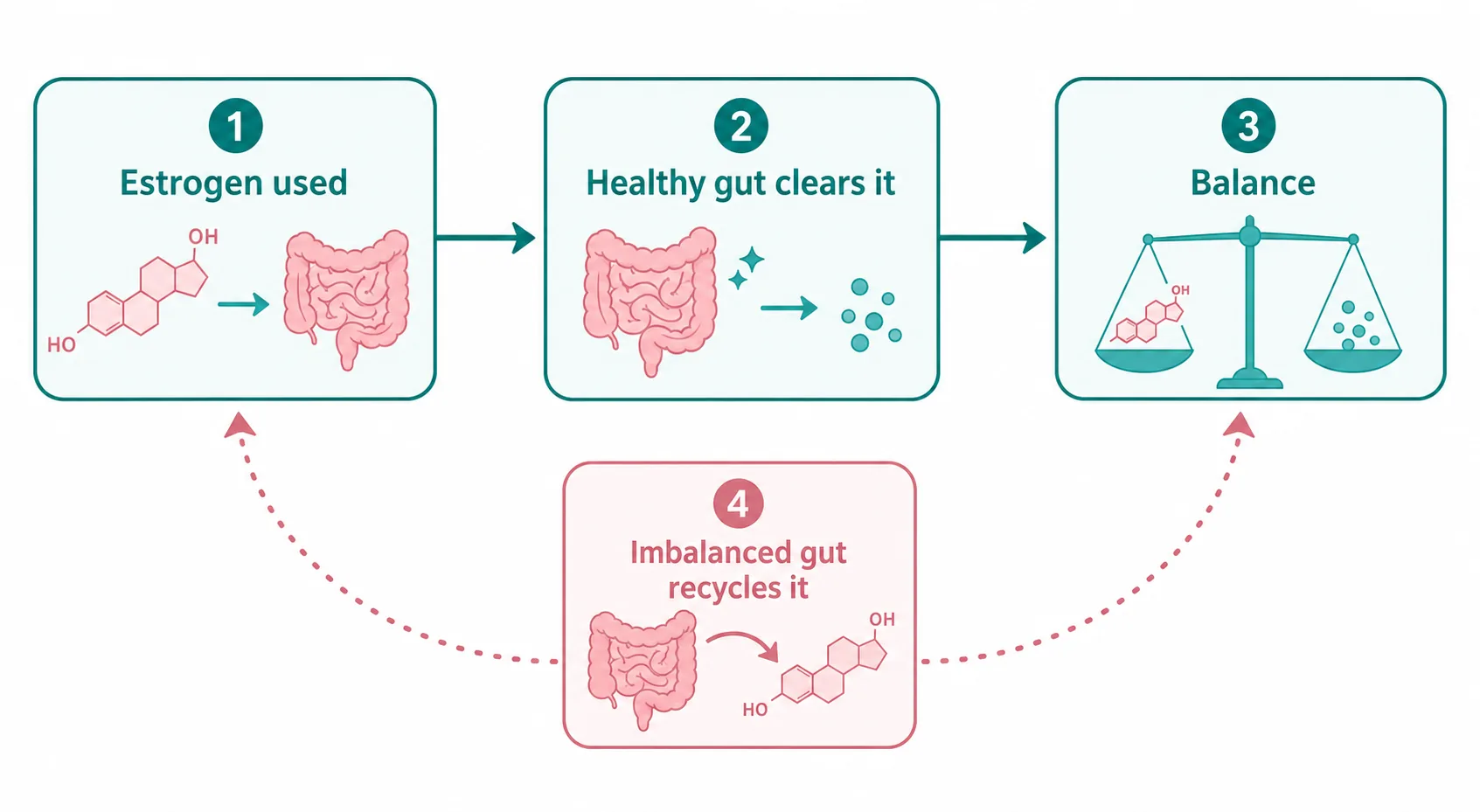
When your gut is healthy, it carries used estrogen out of the body as waste. When the gut is out of balance, that same estrogen can get switched back on and recycled into circulation, nudging your levels too high, or in other cases leaving them too low. Either way, balance slips. That’s a big reason gut health directly affects female hormones, and why repairing digestion often eases symptoms that seem purely hormonal. Research on the gut microbiome and female health points to this microbe–estrogen relationship as a genuine driver of hormone balance. So does gut health affect hormones? The evidence says yes, meaningfully.
Perimenopause, Menopause, and the Gut
This link matters even more as women move through perimenopause and menopause. As estrogen naturally declines, the gut lining and the variety of gut microbes can shift too. It runs the other way as well: a struggling gut can make hot flashes, weight gain, poor sleep, and mood swings feel worse, a frustrating feedback loop.
The good news is you can work with that loop. A 2025 paper in Frontiers in Endocrinology found that supporting the gut microbiota has real potential to improve the health of menopausal women, partly by helping regulate estrogen. For anyone looking into perimenopause gut health support, that’s the mechanism behind it.
Stress, Cortisol, and the Gut: The Bridge Most People Miss
Stress is the connector most people never hear about. When cortisol, your main stress hormone, stays high, it can weaken the gut lining. And a stressed, inflamed gut keeps sending signals that push cortisol back up. Round and round it goes, and the result often looks like belly weight, wired-but-tired evenings, and sleep that never quite restores you.
That gut microbes can actually make hormones isn’t a theory. Harvard Medical School researchers identified gut bacteria that produce a hormone tied to postpartum depression, a real-world example of the gut acting as a hormone factory. The gut and thyroid are connected in a similar way: poor gut health can interfere with how your body turns on thyroid hormone, which is why sluggish digestion and low-thyroid symptoms often travel together.
You can have normal levels on paper and still feel awful because the behind-the-scenes processing is off.
Why “Normal” Hormone Tests Often Miss the Problem
So why did your labs look fine? A standard hormone panel takes a snapshot of how much of a hormone is in your blood at one moment. What it usually doesn’t show is how well your gut is clearing and recycling those hormones, or how cleanly the signals are getting through. You can have normal levels on paper and still feel awful because the behind-the-scenes processing is off.
This is where connecting the dots matters. Instead of reading one number in isolation, we look at how your labs, gut, stress, sleep, and metabolism fit together, which is often where the real story finally shows up.
What Is the Functional Medicine Approach to Hormonal Imbalance?
Functional medicine looks for the root cause instead of just quieting the symptom. Rather than handing you one pill for fatigue and another for sleep, we ask what’s driving the imbalance in the first place, and we look at hormones, nutrition, stress, sleep, and gut health together, because they influence one another.
From there, a functional medicine gut healing plan tends to follow a simple arc: remove what’s irritating the gut, rebuild a healthy gut lining and a balanced mix of microbes, and support your body’s ability to clear hormones properly. It’s about fixing the foundation so the rest can settle.
How to Fix Gut Health and Hormonal Imbalance
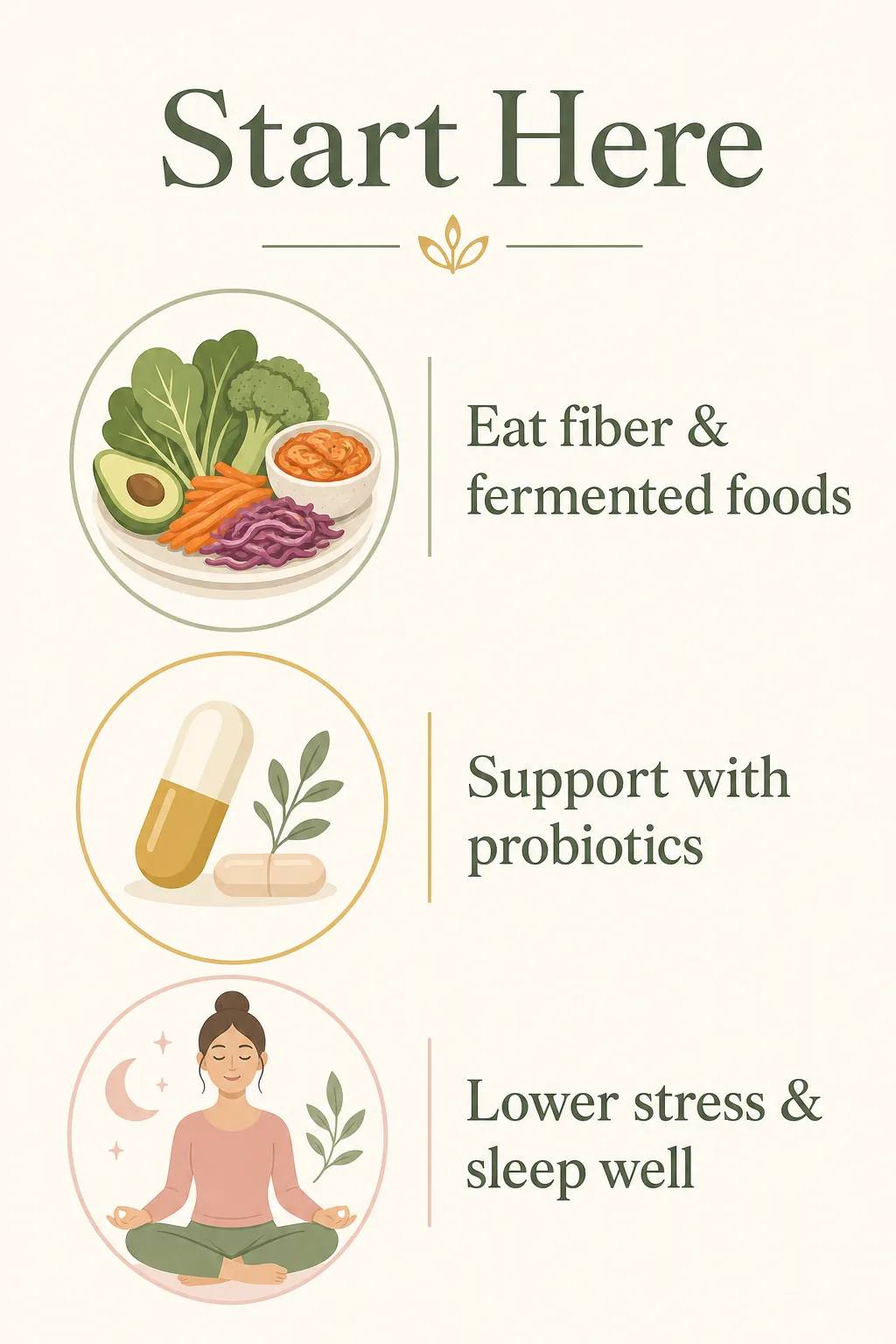
Here’s where it gets practical. A few reliable places to start:
Eat for your gut and your hormones
Build meals around fiber, colorful plants, and enough protein, and add fermented foods like yogurt, kefir, or sauerkraut. Fiber feeds the good microbes and helps your body carry used hormones out. A diet built for gut health and hormone balance doesn’t have to be complicated, it has to be consistent.
Support the gut with the right nutrients
Probiotics, prebiotic fiber, and certain nutrients can help, but the right mix depends on you. There’s no universal hormone and gut health supplement that fits everyone, and more isn’t better. A 2025 study on microbiome, metabolism, and reproductive health explored how shaping the microbiome can influence both, a reminder that these tools are powerful and work best with guidance rather than guesswork.
Manage stress and sleep
Because cortisol and the gut feed each other, calming one helps the other. Protect your sleep, get daylight and movement, and build in real recovery, even ten quiet minutes counts.
Work with someone who connects the dots
When symptoms have lingered despite your best efforts, a personalized plan beats trial and error. If you’ve been searching for functional medicine gut health support near you, Monarch works with patients across Michigan to map the whole picture.
Getting Started in Michigan: The 12 Week Reset
Monarch Functional Medicine is a licensed Michigan provider, and our whole approach is built on turning confusion into clarity. Every patient starts with the 12 Week Reset, a structured program designed to uncover the root causes behind your symptoms and build a personalized roadmap for your gut and your hormones together. It’s the practical first step from “my labs are normal but I don’t feel normal” to a plan that finally makes sense. When you’re ready to feel like yourself again, the 12 Week Reset is where we begin.