
Why Hormones Care About Your Daily Rhythm
Your hormones follow patterns. Cortisol rises in the morning, a pattern known as the cortisol awakening response. Melatonin rises at night. Insulin responds to food timing. When daily habits fight those rhythms, symptoms show up.
Common signs your routine is off
- Morning fatigue or brain fog
- Energy crashes mid afternoon
- Trouble sleeping despite exhaustion
- Increased cravings or anxiety
Hormone balance depends on consistency more than perfection.
Morning Habits That Set the Tone
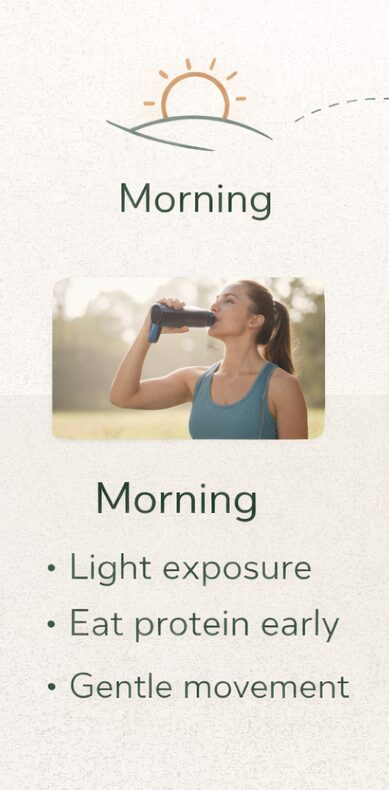
How you start the day matters more than most people realize.
Focus on
- Waking within the same 60 minute window daily
- Light exposure within the first 30 minutes
- Eating protein early to stabilize blood sugar
- Gentle movement instead of intense cardio
What to avoid
- Skipping breakfast when stressed
- Immediately checking email or social media
- Excess caffeine on an empty stomach
Midday Support for Energy and Focus
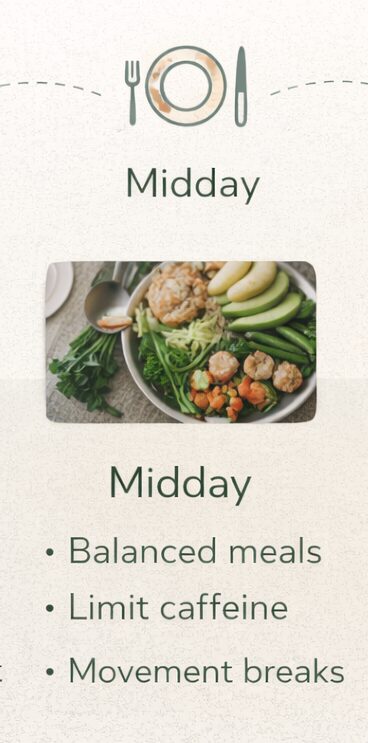
The goal midday is steady energy, not survival mode.
Helpful strategies:
- Eat balanced meals with protein, fat, and fiber
- Take short movement breaks instead of powering through
- Limit caffeine after early afternoon
- Get outside if possible, even briefly
When cortisol stays elevated all day, the body struggles to recover at night.
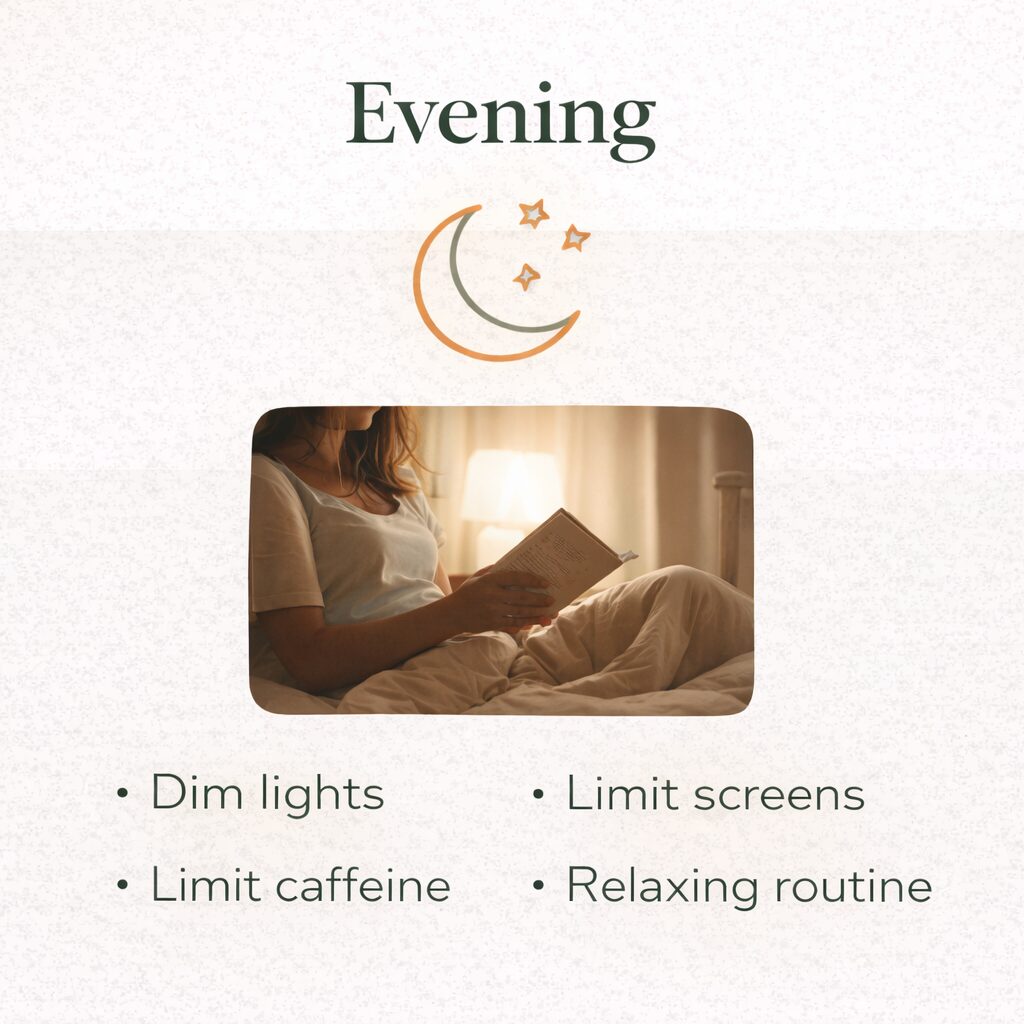
Evening Habits That Support Recovery
This is where many people unintentionally sabotage hormones.
Key evening shifts
- Eat dinner at least 3 hours before bed
- Dim lights after sunset
- Reduce screen exposure one hour before sleep
- Create a predictable wind down routine. Sleep is not passive. It is when hormones reset.
What Consistency Really Looks Like
A supportive routine does not mean rigid rules.
Aim for:
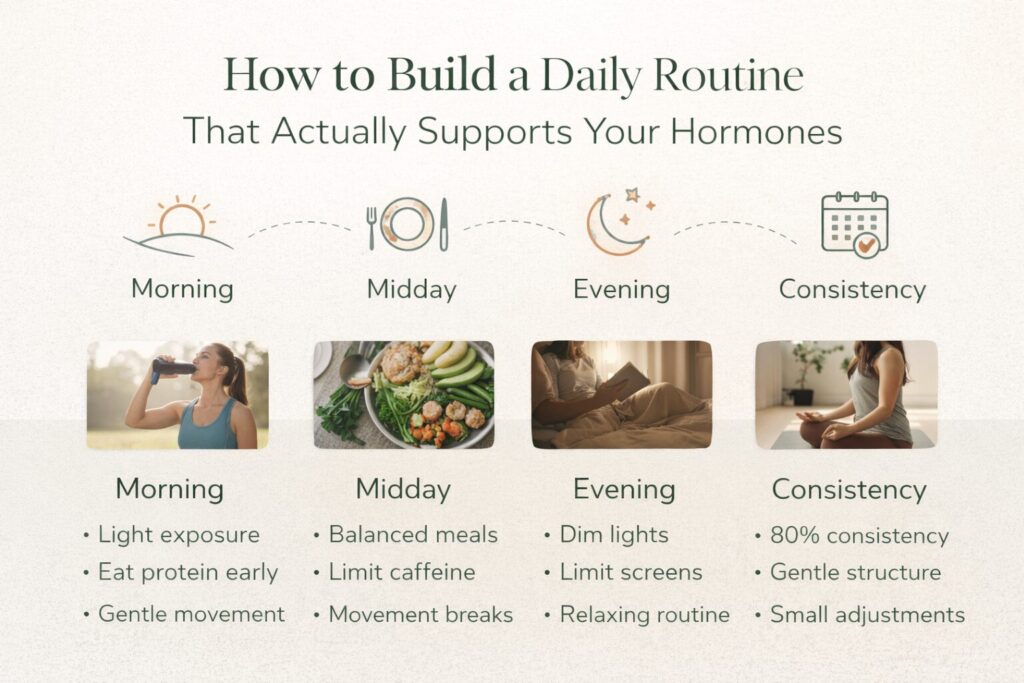
- 80 percent consistency
- Gentle structure, not control
- Adjustments during high stress seasons
Functional medicine routines work because they fit real life.
Conclusion
You do not need more willpower. You need habits that support your biology. When your routine works with your hormones instead of against them, energy improves, cravings calm down, and sleep becomes easier.
If symptoms persist despite lifestyle changes, deeper lab testing can help identify where your body needs support.