A functional medicine approach to hormone imbalance in women starts with a detailed history, symptom and cycle context, and evaluation for other possible causes. A clinician may choose targeted testing when it answers a specific question, then consider nutrition, sleep, stress, metabolic health, and treatment options together.
This article is educational and does not diagnose a hormone condition or replace urgent, gynecologic, or primary care evaluation.
When Your Labs Are “Normal” but You Don’t Feel Normal
You used to have energy to spare. Now afternoon coffee does nothing. You fall asleep fine, then wake at 3 a.m. with your mind running. The scale has moved up eight or ten pounds, mostly around your middle, and nothing about your eating or exercise changed. Words go missing mid-sentence. Your periods are heavier, closer together, or off any predictable schedule. You snap at people you love and feel awful afterward.
So you go in. A couple of lab values get checked. You are told everything looks fine. Maybe you leave with birth control, an antidepressant, or advice to sleep more. The message underneath, said out loud or not, is that this is simply what your thirties or forties or fifties feel like.
Symptoms like these can have several possible causes. A careful history, examination, and targeted evaluation can help determine what needs attention.
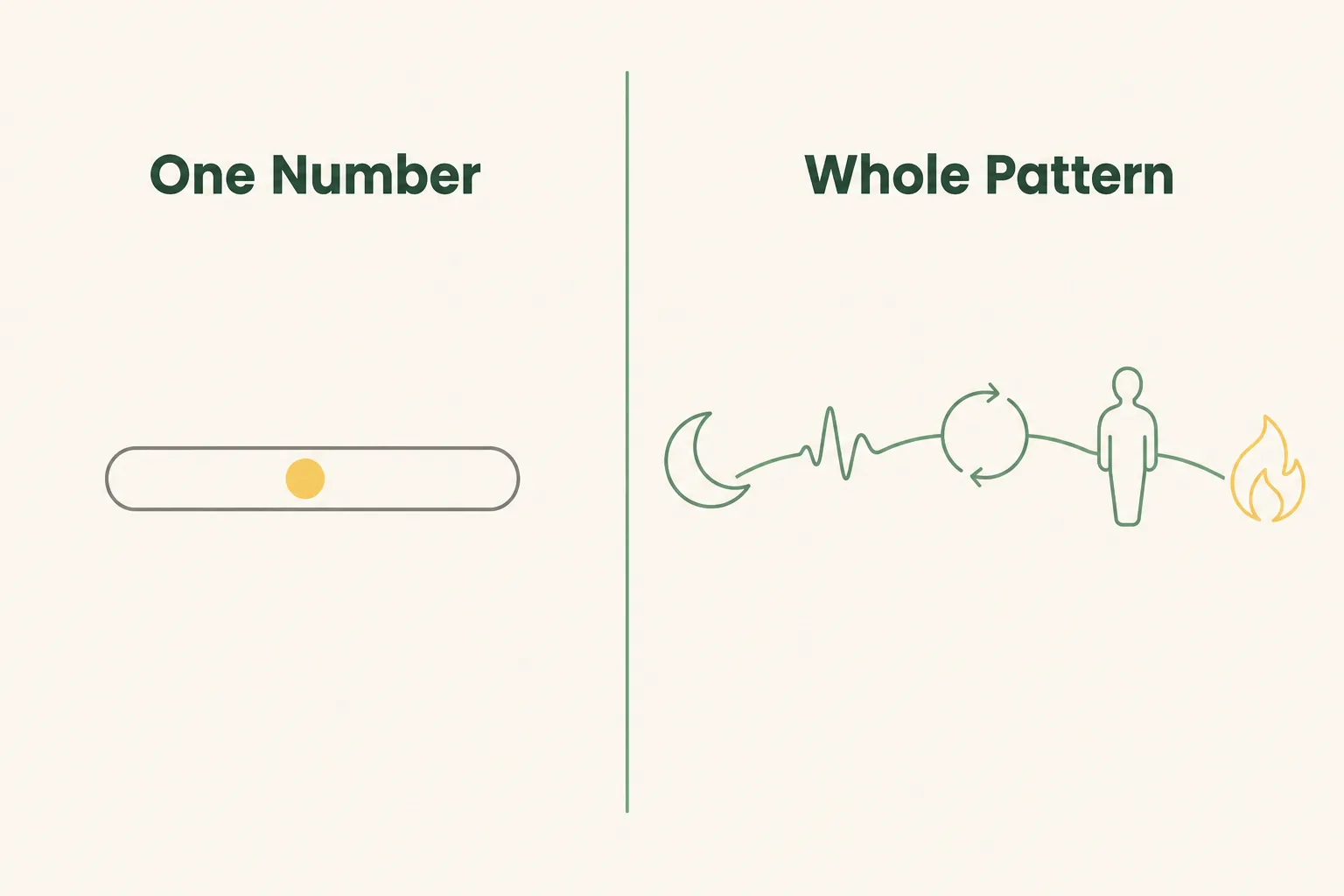
Hormone problems in women are rarely one number out of place. They are patterns, built over years, showing up across several body systems at once.
I’m Julie McDonald, MMS, PA-C, FMACP, Founder and Lead Provider of Monarch Functional Medicine. I have more than two decades of clinical experience across emergency, family, internal, and functional medicine. I work with women who have been told their labs are normal but still feel that something is wrong. Here is what a functional medicine approach to hormone imbalance in women actually looks at: how we test, how we read results, and what a personalized plan involves. Monarch provides care in person in Marquette and virtually throughout Michigan.
What “Hormone Imbalance” Actually Means
Think of hormones as your body’s messaging system. A hormone is made in one place, travels through the bloodstream, and gets read somewhere else entirely. Estrogen made in the ovaries has something to say to your brain, your bones, your skin, and your blood vessels.
Hormone-related symptoms can reflect differences in production, signaling, timing, metabolism, or how the body responds to a hormone. Those possibilities are not interchangeable, which is why the term “imbalance” should not be treated as a diagnosis by itself.
The phrase “hormone imbalance” does not identify one condition. Two women can have similar laboratory values and different symptoms, and symptoms can also have non-hormonal causes.
For a general medical overview of how hormone-related symptoms can overlap with other conditions.
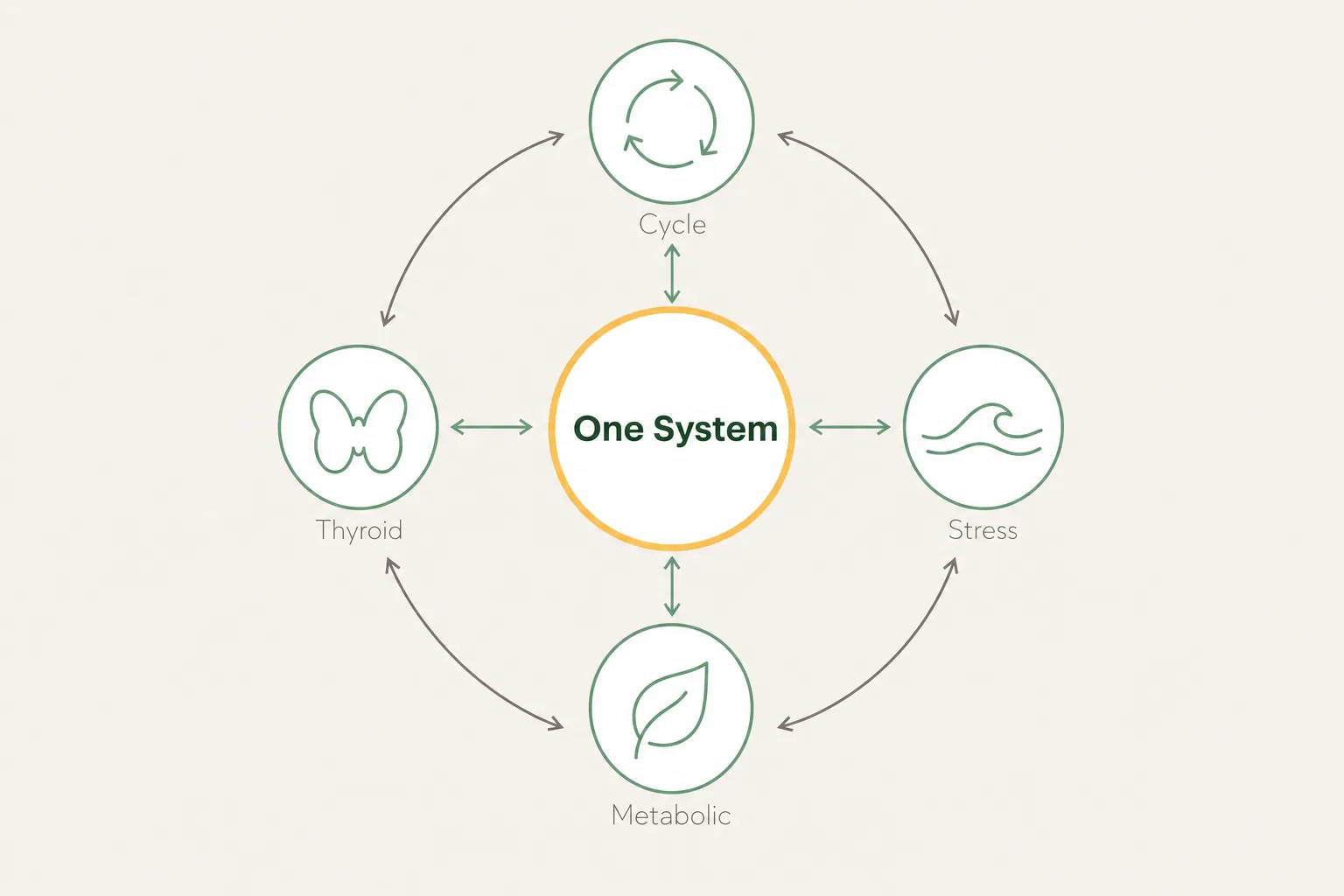
The Four Hormone Groups That Talk to Each Other
Cycle hormones: estrogen and progesterone. Estrogen supports reproductive function and affects several body systems. Progesterone also has important roles in reproductive physiology, but hormone patterns and related symptoms vary by life stage and individual context. A clinician should interpret these hormones alongside the menstrual cycle, symptoms, medications, and other findings.
The stress hormone: cortisol. Cortisol is involved in the body’s stress response and follows a daily pattern. Stress, sleep disruption, chronic pain, and other factors may affect how someone feels, but one symptom or cortisol result does not establish a cause.
The metabolic hormone: insulin. Insulin helps move glucose from the blood into cells. When insulin resistance is present, it may be part of the metabolic picture, including for some women with PCOS. Weight changes, cravings, and fatigue have many possible causes and should be assessed in context.
The thyroid. Thyroid hormones affect metabolism and other body functions, but thyroid symptoms overlap with many conditions. A clinician can decide which thyroid evaluation is appropriate based on the person’s symptoms and history.
One possible pattern, not a diagnosis, can involve stress, sleep disruption, metabolic changes, and overlapping symptoms. These connections can be worth discussing with a clinician, but the same symptoms can have other causes.
Symptoms, Grouped by What They Point Toward
Energy and sleep: the hard afternoon crash, tired but wired at bedtime, waking between 2 and 4 a.m., needing caffeine to function rather than to enjoy it.
Mood and brain: a short fuse, anxiety that feels new and unearned, trouble finding words, low motivation, a flatness that does not feel like classic depression.
Body composition: weight gain that resists the diet and exercise that used to work, softening muscle, puffiness that comes and goes with your cycle.
Cycle changes: heavier or unpredictable bleeding, cycles that shorten, PMS that has noticeably worsened, painful periods, or cycles that stopped.
The dismissed list: thinning hair, adult acne, dry skin, absent libido, bloating and irregular digestion, feeling cold when everyone else is comfortable, night sweats.
These symptoms can overlap with thyroid dysfunction, iron deficiency, blood-sugar concerns, sleep apnea, perimenopause, medication effects, pregnancy, and other conditions. Symptoms alone cannot identify the cause, so a careful history and appropriate evaluation matter.
When to Seek Medical Evaluation
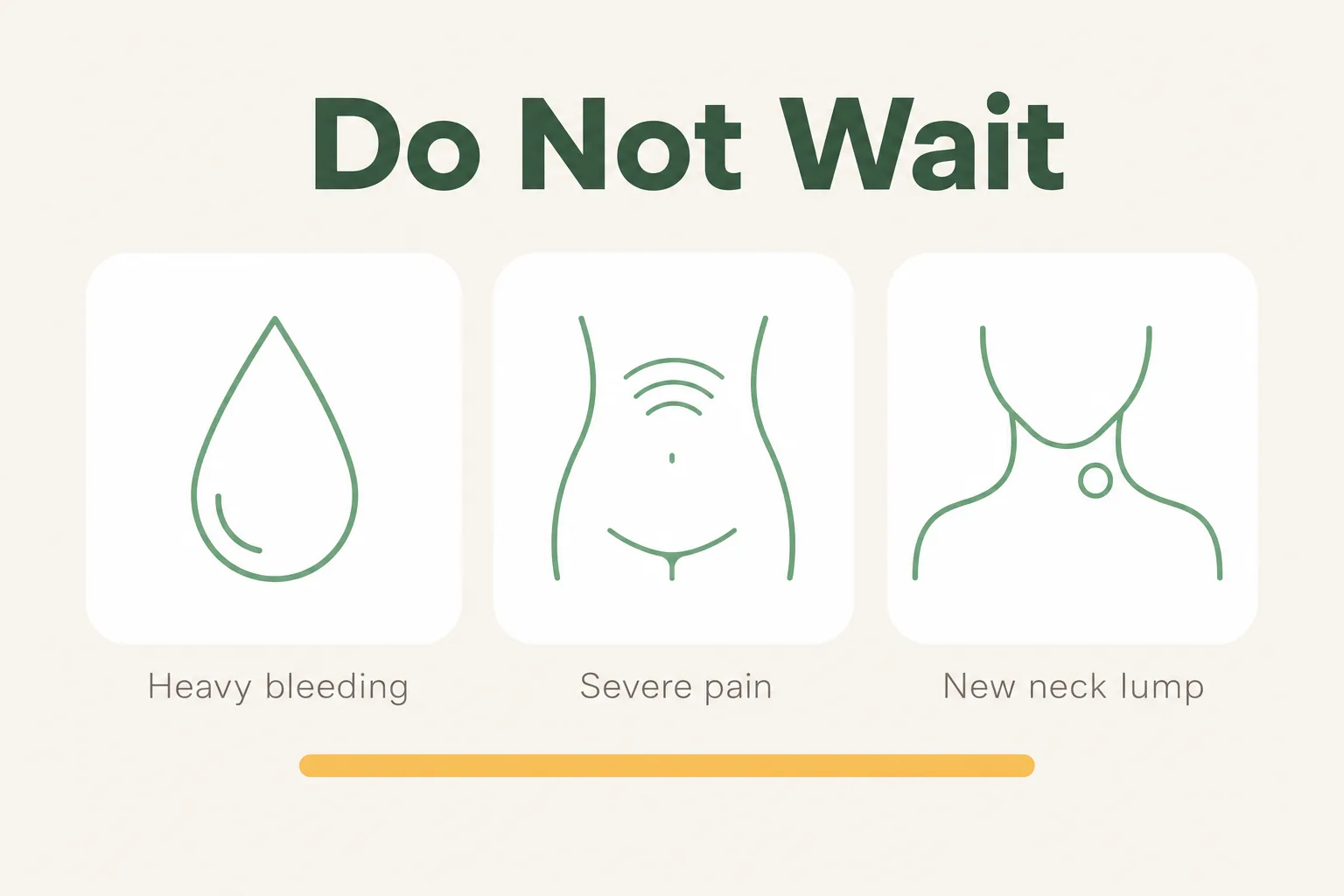
Heavy bleeding that soaks through protection, bleeding after menopause, severe pelvic pain, a neck lump, possible pregnancy with concerning symptoms, or rapidly worsening symptoms should be evaluated promptly. The evaluation may include a medical history, medication review, examination, laboratory testing, or imaging depending on the concern. See UCLA Health’s overview of hormone-symptom evaluation.
What Functional Medicine May Add to a Standard Evaluation
Standard medical care is built to detect disease, and it is genuinely excellent at that. A thyroid that has failed, a tumor, a dangerous lab value: that system will find it and treat it, and I want you inside it when that is what is happening. I trained in it and still rely on it.
The gap shows up before disease. Reference ranges are wide on purpose, designed to flag illness rather than to describe where a specific woman functions best.
You can sit inside the range and be a long way from your own baseline.
A reference interval is not the same as a diagnosis, a treatment goal, or an individualized assessment.
Different treatments may address different symptoms, while a broader history can help determine whether additional factors also deserve attention.
Functional medicine is not anti-medicine. We borrow conventional diagnostic rigor, then keep asking questions after the disease screen comes back clean. For the shorter version of how this plays out clinically, our hormone-treatment approach covers the framework we use.
Factors That May Contribute to Hormone-Related Symptoms
These are areas a clinician may review, depending on your history and symptoms.
Stress, sleep, and daily demands. Sleep quality, stress, chronic pain, and the timing of symptoms may all be relevant. A single cortisol result does not establish the cause of fatigue, anxiety, or cycle changes.
Blood sugar and insulin resistance. Insulin resistance may be relevant for some women, including some women with PCOS, but it should be evaluated as part of the broader metabolic and clinical picture.
Digestive symptoms and hormone-related concerns. Digestive symptoms may be relevant to the overall assessment, but they do not by themselves prove an estrogen-clearance problem. For additional context, read how gut health may relate to hormone-related symptoms.
Thyroid function. Thyroid evaluation should be guided by symptoms, history, examination, and appropriate laboratory testing.
Nutrient deficiencies. Documented deficiencies, inadequate intake, and medication effects may be relevant, but supplements or dietary changes should be based on the individual’s history and clinical needs.
Everyday exposures. People may choose practical exposure-reduction steps if those changes fit their preferences, but they should not be presented as a guaranteed hormone treatment.
Energy availability and recovery. Inadequate energy intake, excessive training, or limited sleep may be relevant for some people, but this pattern should be evaluated rather than assumed.
How This Functional Medicine Approach Works
Our testing philosophy is simple: labs answer specific questions raised by your history. We do not order panels to collect data and hope something jumps out.
Step one is a long conversation, not a blood draw. When did you last feel like yourself? What changed around that time? What does a typical day of eating look like, including timing? When do you fall asleep, and when do you wake? What has your cycle done over the last year? What medications and supplements are you taking, and what have you stopped? What runs in your family? A detailed timeline usually tells me where to look before a single tube of blood is drawn.
Tests Are Chosen for the Clinical Question
Possible blood work depends on the history and clinical question. It may include thyroid, blood sugar, iron, vitamin D, inflammation, or lipid markers when those results could change care.
Cycle-timed sex hormone testing. If testing is appropriate, menstrual timing, medications, and life stage can affect interpretation. In perimenopause, hormone levels can fluctuate, so testing is not automatically necessary or definitive.
Dried urine hormone testing (often called the DUTCH test). It may be considered in selected cases, but it is not required for every woman and should not replace standard clinical evaluation. A provider should explain what the test can and cannot answer before ordering it.
Stool and microbiome testing may be considered when digestive symptoms are prominent or when the result could change the plan; it is not a routine requirement for every hormone concern.
Nutrient and genetic testing should be used selectively, when the result is likely to change care.
No single test identifies the cause on its own. Results need clinical interpretation alongside symptoms, history, medications, and examination findings.
Interpreting Results in Clinical Context
Laboratory values need to be interpreted alongside symptoms, history, medications, life stage, and examination findings. A reference interval cannot determine on its own whether a person feels well or needs treatment.
A result near a reference limit may deserve context, but it should not be presented as explaining symptoms unless the broader clinical picture supports that interpretation.
The goal is to connect laboratory findings with the person’s history and priorities. That is the approach behind Monarch’s care.
Related readingThe Missing Link Between “Normal Labs” and Persistent Symptoms – Monarch Functional MedicineRead the guide →What Personalized Care May Include
A practical plan often begins with foundations such as adequate nutrition, sleep, movement, and medication review. Advanced interventions or supplements should be considered only when they fit the clinical picture.
Plans are individualized, and no two look the same. What follows is the territory we work through, not a protocol to copy.
Food: Building Blocks, Blood Sugar, and Clearance
Adequate protein, fats, carbohydrates, and overall energy support general health. Nutrition needs vary by person, health status, activity, and goals.
For blood sugar, a clinician may discuss meal composition, timing, and consistency. Examples may include pairing carbohydrates with protein, fat, or fiber and avoiding long periods without food when that pattern is not serving you.
Fiber-rich foods and vegetables can support overall nutrition and bowel regularity; no single food guarantees hormone clearance or symptom relief. Adequate energy intake also matters, especially when training demands are high.
Caffeine and alcohol affect people differently. Tracking timing, quantity, sleep, and symptoms can help guide an individualized discussion.
Stress, Sleep, and Movement
Stress support may include breathing exercises, daylight exposure, a wind-down routine, boundaries, and recovery time. The right approach depends on the person’s needs.
Sleep affects energy, mood, and overall health. Sleep-supportive habits may help, but the timing and degree of improvement vary.
Strength training, walking, and other regular activity may support muscle, bone, and metabolic health during perimenopause. Intensity and recovery should be individualized.
Digestive Support, Supplements, and Hormone Therapy
If digestive symptoms are present, they can be evaluated alongside the rest of the health history. Bowel regularity matters for comfort and general health, but digestive symptoms do not automatically indicate a hormone-clearance problem.
Supplements are selected based on history, medications, laboratory findings, and safety considerations. “Natural” does not automatically mean risk-free.
People may choose practical exposure-reduction steps, such as avoiding heating food in plastic, if those changes fit their preferences. These steps should not be presented as a guaranteed hormone treatment.
Menopausal hormone therapy may be appropriate for some women after an individualized review of symptoms, goals, risks, and contraindications. FDA-approved and compounded products are not interchangeable. For medical context, see ACOG’s guidance on compounded bioidentical hormone therapy and the Endocrine Society’s menopause-treatment resource. Lifestyle care may complement, not automatically replace, hormone therapy. No outcome is promised or guaranteed.
How Hormone-Related Concerns May Change Across Life Stages
The same symptoms may have different contributors across life stages, so the evaluation should account for age, cycle status, pregnancy or postpartum status, medications, and personal goals.
Cycling years and PCOS. PCOS may involve metabolic, androgen, cycle, fertility, and other health considerations. Care should be individualized rather than assumed from symptoms alone. Learn more about Monarch’s PCOS care.
Perimenopause. Hormone patterns can fluctuate, and symptoms may include changes in sleep, mood, bleeding, temperature regulation, or sexual health. A broader assessment may help determine which concerns deserve attention. Read more about low progesterone concerns if that is part of your question.
Menopause and beyond. Care may include symptom relief and discussion of bone, muscle, cardiovascular, and overall health. See Monarch’s menopause care for a related service overview.
Thyroid at every stage. Thyroid dysfunction can share symptoms with perimenopause, PMS, depression, and other conditions, so it should be evaluated when the history suggests it.
Postpartum and post-birth-control changes. These situations may require attention to reproductive health, medications, nutrition, sleep, and the individual’s goals.
What Evaluation and Follow-Up May Look Like
Most articles describe the philosophy and stop there. Here is an honest sequence.
| Timeframe | What happens |
|---|---|
| Weeks 1 and 2 | A long intake that walks your timeline in detail. Testing ordered from that conversation, timed to your cycle where it matters. First foundational changes start right away, usually protein, meal timing, and sleep, because those do not require lab results. |
| Weeks 3 through 6 | Results come back, and we review them together, in plain language, until the pattern makes sense to you. The plan gets built from what we actually found. Early wins most often show up in sleep quality, afternoon energy, and digestion. |
| Weeks 7 through 12 | Adjustments based on how you responded, retesting where it changes a decision, and the less exciting work of turning changes into habits that survive a busy week, a vacation, and a bad month. |
Patterns built over five or ten years rarely resolve in three weeks, and individual results vary. Progress shows up as a symptom log trending the right way, cycles becoming more predictable, energy that holds through the afternoon, and sleep you do not have to think about.
How to Choose Hormone Care in Michigan
If you are searching for women’s hormone health near you, a few questions separate thorough care from a package deal. What testing is included, and what does it cost? How much time do you actually get per visit? Who reviews the results with you, and for how long? Is nutrition and lifestyle guidance built into the program, or sold separately? How are supplements chosen, and can the clinician explain why each one is on your list?
Green flags: a licensed clinician who can order and interpret real labs, a written plan you understand, a willingness to coordinate with your primary care provider or specialist rather than replace them, and a clear pathway if testing turns up something that needs conventional treatment.
Cautions: identical protocols handed to every patient, hormone therapy prescribed without a full workup, and testing sold without meaningful interpretation.
On credentials, look for a clinician licensed to practice in your state (a physician, physician assistant, or nurse practitioner) with genuine training and experience in hormone and metabolic health. Functional medicine training programs and certifications exist, and they are a reasonable signal, but licensure and clinical experience come first. Ask directly what someone’s training is and how long they have been doing this work. Monarch provides care in person in Marquette and virtually throughout Michigan; ask the practice which services require in-person access.
What This Approach Is Not
It is not a replacement for urgent or specialist care. Bleeding that soaks through protection, bleeding after menopause, a lump or nodule in the neck, severe pelvic pain, or any concerning finding on testing needs prompt medical evaluation. Root-cause work does not wait in line ahead of that.
It is not anti-medication and not anti-hormone therapy. Both are tools, and sometimes they are the right ones.
It is not a cure or a guarantee. We look for contributors, address what we find, and track your response.
It is not a supplement subscription. Supplements support a plan. They are not the plan, and a program that is mostly a monthly bottle order is not a workup.
And it is not something to assemble yourself from articles, including this one. Everything above is meant to help you ask better questions, not to replace an evaluation by someone who can see your full picture.
Frequently asked questions
What is a functional medicine approach to hormone imbalance in women?
Is hormone imbalance a medical diagnosis?
Do women need hormone testing during perimenopause?
Can thyroid disease, anemia, PCOS, or sleep apnea cause similar symptoms?
Are compounded bioidentical hormones the same as FDA-approved options?
When should abnormal bleeding or pelvic pain be evaluated?
How do I know if my symptoms are hormonal or something else?
My doctor said my hormone labs were normal, so why do I still feel awful?
Do I need the DUTCH test, or is blood work enough?
How long before I feel different?
Can functional medicine help with PCOS specifically?
Is this an alternative to hormone replacement therapy?
Do I have to give up coffee, wine, or carbs?
Does insurance cover this, and do I need to live near your office?
A Clear Next Step
If your symptoms have been difficult to explain, a structured evaluation can help organize the questions. The goal is to understand your history, symptoms, laboratory findings, and priorities together.
If it is a fit, you can start the 12-Week Reset or book a free strategy call to discuss your goals and next steps. The program provides a structured starting point, while follow-up helps determine what should happen next. No outcome is promised or guaranteed. Start with a qualified clinician who can coordinate with your existing care when needed.